Vibe Coding a Business Website: Is It Safe for SEO?
Written by 
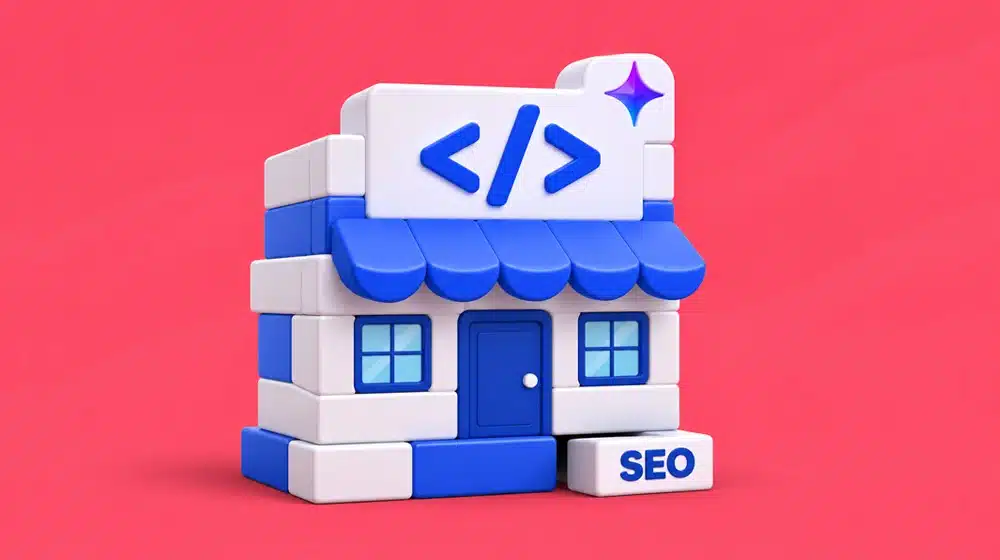
Much has been said recently about the concept of vibe coding (or, more specifically, using generative AI to create code for things like apps and websites), and the pros and cons of the strategy.
What hasn't been talked about quite as much is the ramifications of vibe coding something like a business website. If you're spinning up a new site, creating a new refresh for an older site, or hoping to launch something in the coming months, should you vibe code it? Or are you better off using something off-the-shelf, or hiring a developer?
There's no simple answer to this, which is why I wanted to cover it today.
Vibe Coding vs. Coding Assist
First, I want to lay a foundation for what I'm even talking about.
Coding is a very complex task. A single misplaced semicolon can cause hours of trouble until someone tracks it down, you know? Over the decades, tons of tools have been made to allow coding to be simpler, easier, more error-free. Everything from autocomplete for variable names to code color highlighting to WYSIWYG modular code development have existed for a very long time.
All of these are commonplace, and none of them are vibe coding.
Vibe coding is explicitly the act of using generative AI, something like ChatGPT or Claude Code, to create code for you out of whole cloth.
These tools are designed to allow you to write what you want in more or less plain English, and have the engine interpret that and create code that does it for you. The code it outputs usually works (though not always, and not always efficiently), but there's one thing it's missing that other methods of coding don't.

That one missing piece is understanding. When you vibe code something, you know the intent behind it, but you don't know the mechanics of how it works.
This can lead to all sorts of problems. Maybe it's referencing code dependencies that don't actually exist, allowing for hijacking. Maybe it's coded inefficiently so it wastes processing power and server resources. Maybe it has a memory leak that can eventually cause problems with bloat in a database.
None of this is unique to vibe coding, really, except maybe hallucinated dependencies. Humans create bad code all the time. But when you know what the code does, you know how to trace what is going wrong and how you can try to fix it.
Now, I want to also acknowledge that plenty of people who do know how to code are using vibe coding methods now, too. A lack of expertise isn't necessarily inherent in vibe coding. But when the point of vibe coding is to speed up the process, are you still reading and understanding every line? Or are you just testing that it works and calling it good enough?
Anyway, all of this is just setting the stage for the main topic, but I wanted to get it out of the way first, so we're all on the same page.
The SEO Ramifications of Vibe Coding a Business Website
The way I see it, there are a handful of major potential issues with vibe coding a business website. They are not guaranteed, but they are worth understanding so you can know to look for or avoid them.
One thing it's worth noting, though, is that code quality itself is not an SEO factor. Google doesn't care if your HTML is perfectly immaculate. They don't even evaluate code quality, as far as I know.

What does matter is the ramifications of bad code. You know what is an SEO factor? Site speed. Bad code that keeps a site slow-loading is going to be a hit against your SEO. That's the kind of thing we're talking about here today.
Let's break down the major considerations.
Siloed Stacks and Difficult Migrations
If any of you are old enough to have been around on the internet in the late 90s and early 2000s, you might remember a lot of web hosts that offered free hosting and website builders. These tools made it much easier and more affordable to create a website, especially for people who didn't really know what a server was.
One of the biggest problems with these services was the way they locked you into using them. If you outgrew the host and wanted to move, you'd find critical data was inaccessible, or formatted in a way that it was incompatible with other kinds of website infrastructure.
Migrating to a different platform, then, became a matter of re-engineering and re-creating large chunks of a site from scratch. The whole time, the host might even be adversarial in an attempt to keep you around.

Some of the modern vibe coding platforms are the same. You aren't getting this with something like Claude Code, but when you use a platform like Loveable to handle everything, you get pretty locked into a complex and siloed digital ecosystem.
If you wanted to move later, to a self-hosted or a WordPress or a Drupal framework, you're going to have a hard time.
How is this an SEO impact? The big concern, at least to me, is the lack of control over the infrastructure your site is built on. You end up locked into certain decisions that might not be the best for your business. If you want to migrate later, you might have to make fundamental changes that can affect SEO as well.
Security Vulnerabilities
One significant concern with vibe coding is security vulnerabilities.
AI has made the world of digital security a huge mess, and that's putting it lightly.
On one hand, you have vibe coding presenting a security issue, like the dependencies thing I mentioned already. Vibe code doesn't necessarily follow best practices or even have a consideration for security. Most businesses using vibe coding aren't giving the code a thorough security review. They can be open to exploitation in ways that are known or unknown.
And really, I've seen it all. Hard-coded passwords and API keys. Unpatched vulnerabilities that have been known for a decade. Easy avenues for hijacking.
The flip side is that AI is also making it dramatically easier to find security flaws. You might remember the hubbub about Mythos being restricted from public use due to how easily weaponized it was. Or, more recently, long-standing vulnerabilities that went unnoticed have been uncovered by AI.

When even well-crafted and well-reviewed code is being hammered with attempts to find and exploit vulnerabilities, is it a good idea to build a business site using code you don't have even basic best practices validated for?
This is a big problem for SEO, if for no other reason than your site is going to have a hard time succeeding if it's taken over by hackers or has a malicious code blocker slapped over the search results. If Google thinks your site has been compromised, they can even remove it from the search results entirely.
Inefficient Code and Core Web Vitals
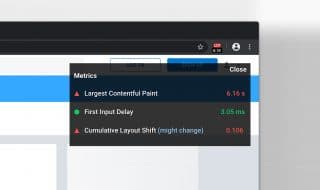
Google's Core Web Vitals are a big part of modern SEO. They want websites to be fast, efficient, slick, and well-rendered, especially for mobile devices.

Vibe code can struggle with this. Code can be sloppy, inefficient, and have built-in delays that cause problems with those core web vitals. It's not just about the code itself, either, but in how it interacts with browsers, with servers, with databases, and other elements of the internet ecosystem.
Obviously, compared to the other issues on this list, "your website is a little slow" is a very minor concern, and there are a lot of ways to mitigate it. But it's still something you need to consider, and one of the big reasons a lot of people choose to vibe code is to bypass a lot of that consideration.
Privacy and Legal Liability
This is a big one, and I don't think it's talked about enough.
Vibe coding has risks, but a lot of those risks end up being pretty minimal for something like, say, a personal blog. If someone hacks your personal blog, you lose your musings but not a lot else.
It's a whole different story for a business website.
This is a site that is potentially handling and processing customer personal information, financial information, and other data. It's handling your business information. It's meant to make you money.
There are a lot of laws and regulations for the safe treatment of sensitive data, from GDPR to SOC 2. You can't really just tell an AI to generate output that is compliant; you need real reviews and oversight. If you don't have those, it opens you up to a lot of potential penalties.

This isn't as much a direct SEO issue, but it's a huge trust issue, and trust is another part of SEO. And, really, SEO is the least of your concerns when the feds come knocking.
Reinventing the Wheel
Another issue I see with vibe coding is that people tend to reinvent the wheel. I've seen elaborate code that replicates the functionality of a different function just built into a coding language. I've seen people put a bunch of time and credits into developing a bespoke website that basically ends up being WordPress But Worse. It's really easy to waste a lot of time and money for no real reason.

This, too, isn't directly an SEO issue. But the more time and the more money you're spending on unnecessary things, the less you're spending on the things that matter to SEO.
How to Use Vibe Coding Responsibly
None of this gets into other issues with using AI to replace humans, like the numerous stories of AI irrecoverably deleting databases, and so on. I could sit here all day and list out all the ways vibe coding can fail you.
At the same time, a lot of this isn't exactly unique to AI. Humans aren't perfect, coders can make mistakes, people can just not know things and fail to implement best practices. That big PHP issue stretched back over a decade; it just wasn't discovered until now.
The appropriate way to think about vibe coding, to me, is as a force multiplier.
If you know what you're doing, you can use it to do those things faster and more effectively. But if you don't know what you're doing, it's like that Shen comic with the giant brain: "I'm not smarter; I'm stupid faster."

Here's my advice.
- Don't reinvent the wheel. Think hard about why you aren't just using WordPress with some pre-existing plugins to do what you need to do. What does vibe-coding custom output do for you?
- Verify everything. If you don't know enough about code to check it, find someone who does and pay them for an overview. No, asking the AI to verify itself isn't reliable; at some point, you need an expert involved.
- Follow best practices. Not just for code, not just for security; follow them for everything relating to business. Follow them for your content, your redirects, your user experience, your metadata.
There are good reasons and good opportunities to use AI. You can use it to create a custom theme for your site if nothing you can find fits your needs. You can use it to whip up small, task-focused WordPress plugins. You can use it to audit your site SEO and identify weaknesses. You can use it to fill out meta descriptions and schema data.
But remember, it's not a magic wand you can wave to turn your dreams into reality. It's a tool, with pros and cons, and it needs to be treated like one.
Does all of this mean you should avoid vibe coding? Not at all. Nor does it mean I'm telling you to hire a developer to do the work, because let's be real; they might just be vibe coding themselves.
What you really need in a business context is that business layer. You need review, oversight, analysis, context, understanding, learning. You need management. The AI can't give you that.

Written by James Parsons
Hi, I'm James Parsons! I founded Content Powered, a content marketing agency where I partner with businesses to help them grow through strategic content. With nearly twenty years of SEO and content marketing experience, I've had the joy of helping companies connect with their audiences in meaningful ways. I started my journey by building and growing several successful eCommerce companies solely through content marketing, and I love to share what I've learned along the way. You'll find my thoughts and insights in publications like Search Engine Watch, Search Engine Journal, Forbes, Entrepreneur, and Inc, among others. I've been fortunate to work with wonderful clients ranging from growing businesses to Fortune 500 companies like eBay and Expedia, and helping them shape their content strategies. My focus is on creating optimized content that resonates and converts. I'd love to connect – the best way to contact me is by scheduling a call or by email.