

Can It Hurt Your SEO if You Use an AdBlock Detector?
Written by 

Ads online have grown more and more contentious over the years, and we're currently in an ongoing arms race between ad networks and ad blockers. Recent shots fired include Google's fundamental changes to Chrome that made previous ad blockers cease to function, and website-based anti-adblock scripts you may have seen if you use an ad blocker.
As a publisher, it's reasonable to want to do what you can to monetize your site, and that can include display ads. So, an ad blocker cuts into your revenue, which means an adblock detector sounds like a good idea. But is it, really?
Key Takeaways
- Adblock detectors generally won't significantly hurt SEO, unless they block Google's crawlers or are extremely intrusive.
- Around 31% of global internet users block ads, partly due to malware risks and widespread ad fraud.
- Ad blockers can skew your analytics by blocking tracking scripts, making portions of your audience invisible.
- Aggressive adblock detectors risk increasing bounce rates and harming user experience, both minor SEO signals.
- Alternatives to adblock detectors include paywalls, affiliate links, voluntary donations, and the Acceptable Ads whitelist program.
Why Users Block Ads
If your site relies on ads to survive, ad blockers feel like an existential threat to your ability to keep going. On the other hand, ads are also a notorious vector for distributing malware, and sometimes can even take advantage of browser exploits to distribute that malware without your action. In other words, even with immaculate browsing habits, bad ads can still get you.
Anyone browsing the internet on a phone has likely experienced cases where suddenly the phone is taken over by "your phone is broken," "your phone is infected," or "tap here to run a malware scan" page redirects as well. These malicious scripts use ads as a channel to pull people away from a site and convince them to download malware.
On top of that, recent studies have shown that as much as 22% of online advertising promotes some kind of scam or fraud. And that's things that are verified as scams or frauds, not even things like sports betting or shady crypto that are scummy even if they're technically not fraud.
It's no wonder that some 31% of the global internet-using population uses ad blocking in some way. The number was smaller when it was harder to use ad blockers on mobile, but even that is easier than ever, and ad blockers can even come with some browsers, be infused into a home network via an external device, or even ride along on a filtering DNS like AdGuard.
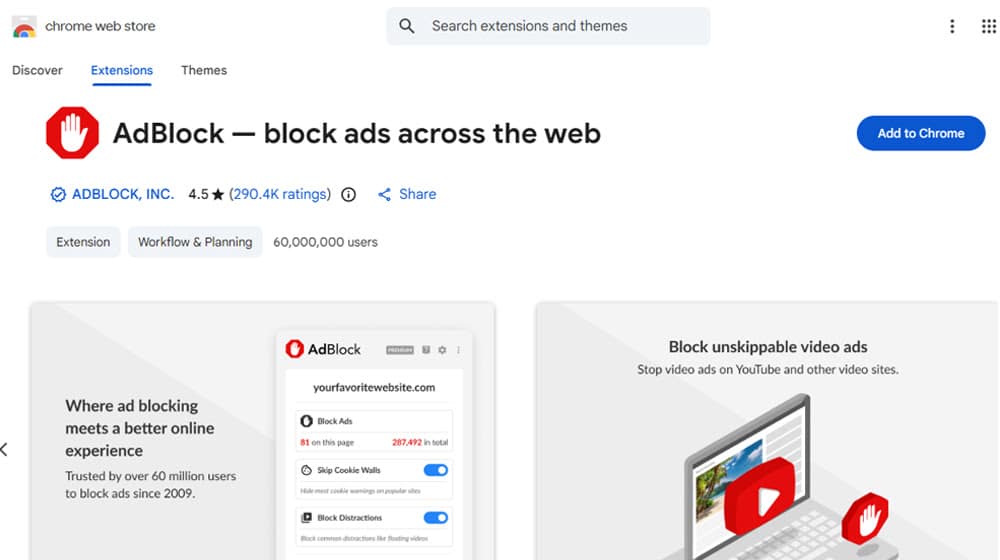
For a publisher, ads are a way to bring in money to keep a site going, but they represent just one of the revenue streams a site could use. To a web user, it's a matter of safety.
Here's a truth you need to confront: you have, broadly speaking, relatively little control over the ads that show on your site. Unless you're managing your own ads directly, you're likely using a programmatic ad network, and that means bad actors can get bad ads on your site without you knowing about it.
I've been an adblock user for as long as ad blockers have existed and honestly, the internet is a very different place without one. It's so much harder to use, so much worse in terms of user experience, and it can feel like you're constantly under assault just clicking through to new websites. You never know which one is going to hijack your screen or show you unwanted adult content or try to sell you a scam.
The Case Against Ad Blockers
Many marketers, particularly those who don't have revenue streams other than display ads, tend to be quite vocally opposed to ad blockers. Display ads already pay so heinously little that you need a lot of volume to make up for it, so ad blockers cutting into that makes it less and less feasible to run a website at all.
Some people argue that ad blockers are akin to theft, sort of like stealing a newspaper. Typically, you would "pay" to access a site by way of seeing ads, and by blocking those ads, you're blocking that value exchange.
You also have arguments like this one, that ad blockers change how a site looks and functions and are effectively defacing the site. Sure, it's not the kind of argument that would hold up in court, but some people make it nonetheless.
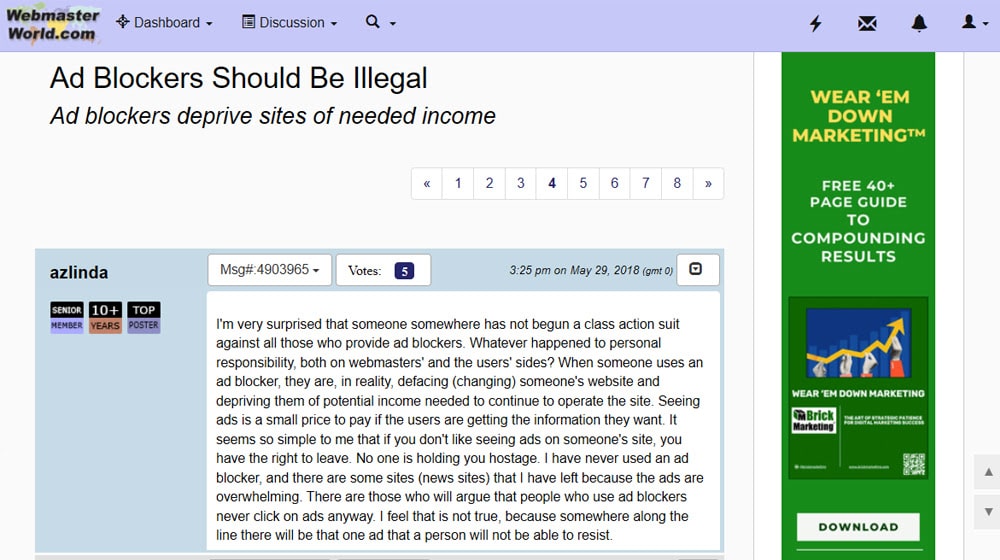
Ad blockers do cut into the revenue of a site that relies on display ads with a PPM scheme. It's arguable, though, that the people running ad blockers are not generally the people who click on ads when they see them, so if you're running PPC or PPA ads, you're unlikely to lose much from ad-blocking users.
There's also the arms race aspect of it. Some sites do a lot to prevent ad blockers from functioning. Facebook, notoriously, has dynamically changing code that makes it extremely difficult for an ad blocker to block an algorithm, script, or DOM with ads in it. Sites often change how ads are displayed to skirt ad blockers. YouTube has even started punishing adblock users by artificially delaying videos or forcing them not to render when an ad blocker is detected.
It's worth considering that ad blockers aren't the only thing that hurts a site in this fashion.
It was a big scandal when Google started adding its knowledge boxes in the search results, giving people answers pulled from websites while keeping the user from clicking through to that website. That's like an ad blocker, except worse, since it prevents the user from seeing any of the site's monetization. Lower traffic, lower sales, lower conversions, lower ad displays, it all takes a hit. If your service pages aren't ranking on Google, this compounds the problem significantly.
Google, at the time, dialed back a bit, but they rapidly pushed forward, and now entire sites basically have no reason for a user to ever visit them.
And now it's even worse with AI overviews, ChatGPT, Perplexity, and other LLM search options. When an LLM generates an answer out of your site and shows it to the user, it doesn't much matter if it cites your site, users aren't clicking through to see. Same deal; any monetization you have is gone for those users. This is part of why every aspect of your site's visibility matters more than ever, from the content you publish to how your pages are discovered and indexed.
Do Ad Blockers Affect SEO?
Often, ads are viewed as divorced from organic marketing. They aren't, though.
For one thing, Google has penalties for sites with too many ads. And that's not even harsh enough; you can still find many examples of sites, especially on mobile, with so many ads that you can't see the content at all.
I'll tell you right off that the use of an ad blocker is not an SEO factor, because Google only considers site factors, not user factors. User behavior is rolled into some site metrics like bounce rates, but those are only low-power SEO factors at best.
Having a site with too many ads can hurt you, but tasteful use of just a few ads is expected and won't be held against you, as long as they aren't disruptive to the user experience. And really, in a world with pop-overs and hello bars and all the rest, a couple of display ads barely stand out anymore.

Ad-blocking apps can affect SEO in a few secondary ways.
On the one hand, they can actually encourage some site use. Users who dislike ads are more likely to use your site when they can't see or be interrupted by them. Ads are often render-blocking, layout-shifting, or otherwise in the way, so when ads are blocked, the user generally has a better user experience.
On the other hand, ad blockers can hurt you in some ways. The revenue thing is big, but ad-blocking scripts can also block other elements of a site, including your CTA pop-ups, slide-ins, and bars, and even things like your cookie consent boxes. Power users can customize ad blockers to block basically any element of a site they want.
Ad blockers also frequently block scripts across the board, and that can include your analytics scripts. That means your data from ad-blocking users can be "invisible" in a way that means you aren't getting the complete picture of your audience. Consider tracking your content performance through methods that aren't solely reliant on those scripts. Consider tracking your content performance through methods that aren't solely reliant on those scripts.
Do Adblock Detectors Hurt Your Site?
One of the ways site owners can fight back against ad blockers is with adblock detectors. Adblock detectors are scripts that put up what is essentially a fake, hidden "ad" and check to see if that element renders. If it does, all is good. If it doesn't, the script executes and takes over the site with a render-blocking window that tells the user that they're blocking ads, and to disable their ad blocking to use the site.
These work in a few different ways. One is through social pressure. The pop-up for the adblock detector just says something like "by blocking ads, you're hurting our site, and if you keep doing it, we might not have enough money to keep the site going," and asks to be whitelisted. These still usually just have an X that can be closed, to allow adblock users to still see the site.
Others are stronger and completely prevent the site from being seen by anyone using an ad blocker. I've even seen some that fully block the user, with a message like "unusual network activity has been detected from your IP address" and the like. Basically, it forms a complete wall; adblock users not welcome.
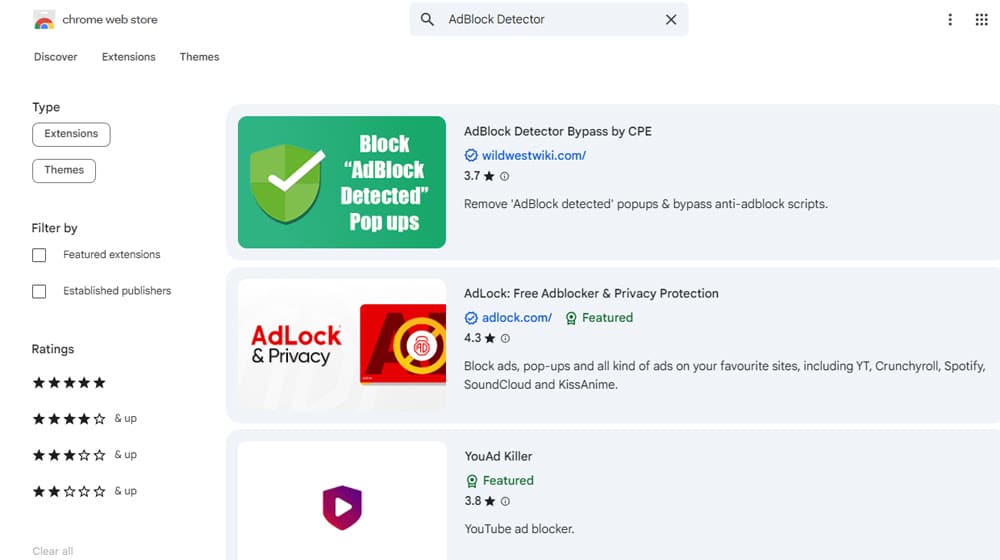
Can these hurt your SEO?
Yes and no. It is, again, pretty much the same story as ad blockers in general. Adblock detectors only trigger for people who are using ad blockers, and adblock users might be blocking your analytics scripts too. You might lose some traffic or have a higher bounce rate, but at best, these are very minimal signals, so they won't contribute massively to your overall SEO and rankings.
All of this is tricky to estimate because adblock users tend to block a lot of the ways they would be tracked, which makes it hard to identify if they're affecting anything, or just passing through the halls of the internet like a ghost. Unusual traffic patterns can be especially difficult to diagnose when certain users are invisible to your analytics - and checking how much traffic your site actually gets becomes even harder under these circumstances.
All of that said, if your anti-adblock script executes on people not running ad blockers, you have a bigger problem. And, of course, there are all sorts of cases where non-ad pop-ups and other elements can override a site and make it obnoxious to use even without ads in play. It's worth knowing how many ads is too many for SEO before layering on additional scripts that could further frustrate visitors.
Alternatives to Adblock Detectors
If you want to run ads, but you don't want to try to fight ad blockers with an adblock detector, what other options do you have?
Sub-render CTAs
One option is to make the ad unit spaces on your site render regardless of whether or not ads are in them. If the ad content is blocked, you have a backup CTA under it, something like a call to disable the ad blocker, or just a site CTA.
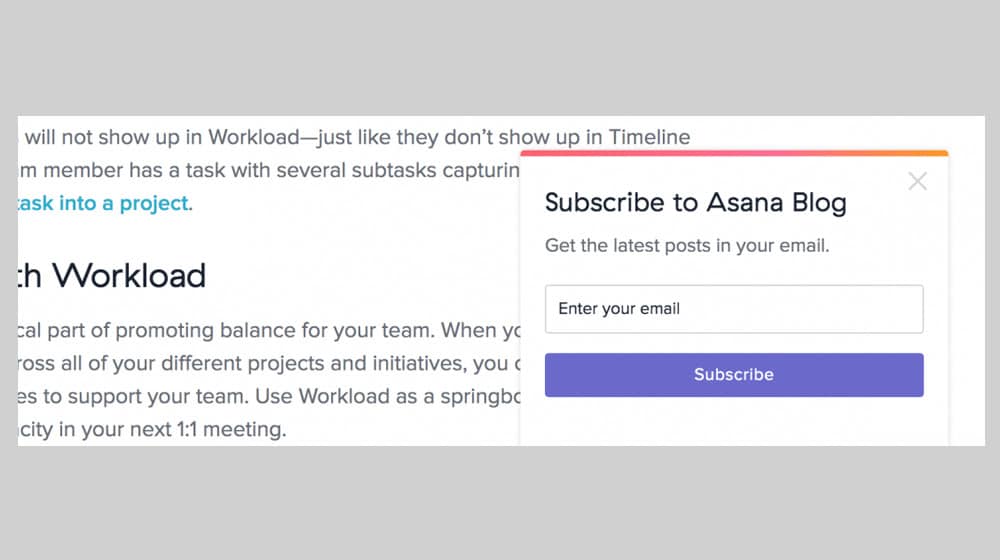
This can work because it shows users where and what kinds of ads would be there, so they can judge for themselves if a) your content is good enough to reward you, and b) if the ads are minimal enough not to be intrusive.
Paywalls
Another option (one you see on a lot of news sites these days, for example) is the humble paywall. Instead of display ads, just put your content behind a paywall for ad-free viewing.

Obviously, this hurts SEO and user access because anyone not paying for your content can't see it, but if you price things right and get a few subscribers, it can outweigh what you would get from ads.
Alternative Monetization
In addition to paywalls, you can also just move away from display ads entirely. Truth be told, I think it's well past time for display ads to die and be replaced by something else. They're so risky and so full of fraud that it's hard to justify the pennies per thousand viewers you get.
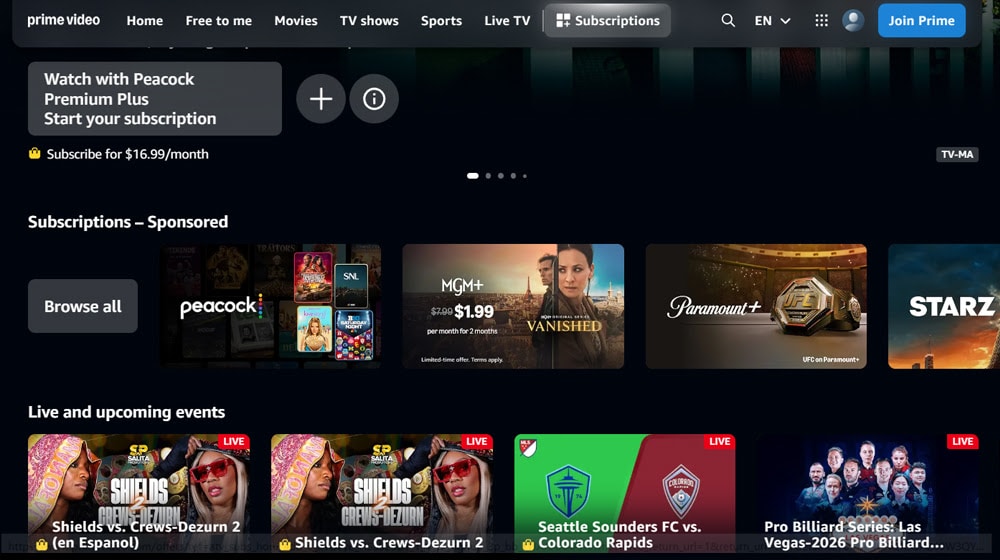
Some potential options include:
- Ad-free membership options. Show your content with ads, but allow users to pay a monthly fee (or even a one-time fee) to have fully ad-free viewing.
- Affiliate links. Affiliate links are still occasionally blocked by ad blockers, but not nearly as often, so it's still a viable profit strategy.
- A Store. Obviously, if you're selling products on your blog, you don't need to monetize your display space. It's a lot more work and overhead, though, and not every site has a good way to sell items.
- Voluntary support. A tip jar, a donate button, calls to support like what Wikipedia does, or even just a Patreon can all be ways for voluntary support rather than ads.
Certainly, it's not easy to just switch how you monetize your site, but let's be real here. Display ads are the low bar. They're the lowest-paying possible option for a reason. Maybe it's time to make the leap to something that requires more investment, but has a higher payout. If you're exploring other revenue paths, it's also worth reviewing red flags in SEO and content agency service agreements before signing on with anyone to help you get there.
Whitelists
One interesting idea is the Acceptable Ads program.
This is an initiative started by Adblock Plus, formerly one of the biggest ad-blocking browser plugins on the market. Basically, they had the idea to allow publishers to join a program that verifies the ads they display, so only good, non-intrusive, non-fraudulent ads get displayed. Once a publisher is enrolled, Adblock Plus would whitelist the site automatically, so adblock users would see ads on those sites.

The idea is that it allows sites to still monetize via ads, but in a safer way. For users whose complaints about ads are related to safety, malware, and fraud, this would do away with their concerns. For users who care more about privacy, usability, or shady non-fraud ads… Well, we mostly switched to uBlock and, later, uBlock Origin.
I think adblock wouldn't be as big of an issue if ad networks had tighter control over the ads and code that run through them. But, as long as fraudsters are willing to pay for ads, ad platforms like Meta can make immense amounts of money by tacitly ignoring scams, so they have a financial incentive to let it keep happening.
If programs like the Acceptable Ads program pick up steam, it could change the way ads and ad blockers work. On the other hand, there will always be ad-blocking apps that don't play nice with ads, simply because some segment of users will always want more control over how they use the internet. Unfortunately, I think that ship has sailed. (even after Google changed Chrome to make uBlock non-functional, uBlock changed to work again.)
Making the Right Decision
So, what's the right choice?
I don't know.
If you have no real option but to use display ads, that's fine. Not everyone can pivot to another means of monetization, after all.
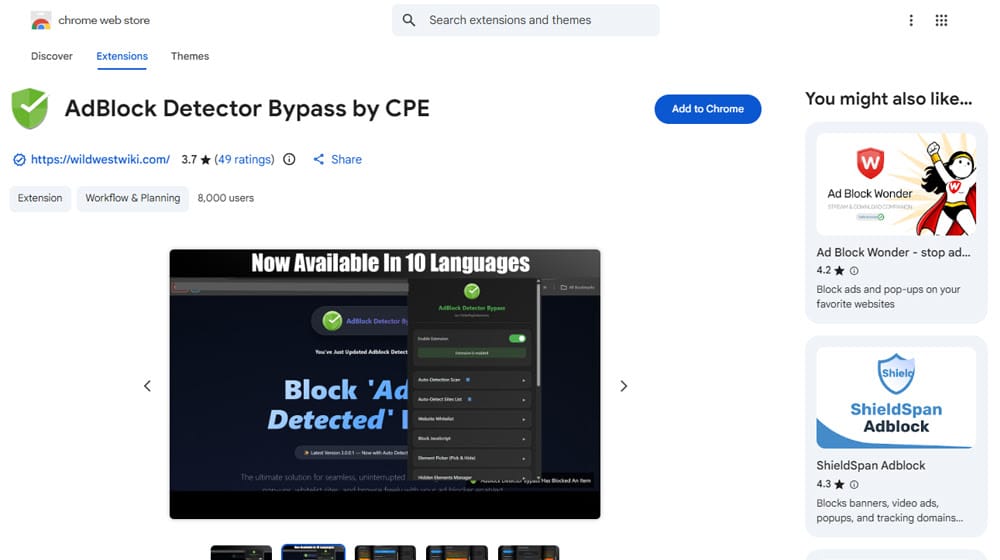
Is an adblock detector going to be effective, or is it just going to hurt you?
Truthfully, I think that adblock detectors generally aren't going to hurt your SEO by any real, tangible amount. The exception is if they're extremely intrusive and prevent a user from seeing your site at all, and especially if they prevent Google's crawlers from seeing your site. A low-key, guilt-based adblock detector is going to be fine.
I recommend testing it if you're interested in trying it. I don't have any sites reliant enough on display ads to run the tests myself, and I'm not aware of any big enough studies showing how effective they are versus any SEO hit you might take, so any data you have would be welcome. If you do use one, let me know how it goes!

Written by James Parsons
Hi, I'm James Parsons! I founded Content Powered, a content marketing agency where I partner with businesses to help them grow through strategic content. With nearly twenty years of SEO and content marketing experience, I've had the joy of helping companies connect with their audiences in meaningful ways. I started my journey by building and growing several successful eCommerce companies solely through content marketing, and I love to share what I've learned along the way. You'll find my thoughts and insights in publications like Search Engine Watch, Search Engine Journal, Forbes, Entrepreneur, and Inc, among others. I've been fortunate to work with wonderful clients ranging from growing businesses to Fortune 500 companies like eBay and Expedia, and helping them shape their content strategies. My focus is on creating optimized content that resonates and converts. I'd love to connect – the best way to contact me is by scheduling a call or by email.







Comments