

Can You Mention GLP-1 Trademarks in SEO Blog Posts?
Written by 

GLP-1 medications are some of the most popular trending meds on the market right now. They're shockingly effective, with a surprisingly low side effect profile, so much so that some people are left waiting for the other shoe to drop. So far, no second shoe has been forthcoming.
That means there's something of a gold rush happening. Now, weight loss marketing is nothing new. Marketing medications is nothing new. So why has this become contentious? Well, that's the secret: it being contentious is also nothing new.
I've been seeing this first-hand as well. Some of my clients operate in the health and wellness space, and tend to touch on or target things like weight loss, weight loss medications, and GLP-1s specifically. They're also receiving C&Ds from the FDA and even from Novo Nordisk due to mentioning trademarked or patented terms.
At the same time, it's not illegal to use a word like "semaglutide" or a brand name like "Ozempic®" on your website. But there are rules and regulations surrounding the details, like being specific about what you're talking about, so you aren't violating a company's trademark or intellectual property.
I wanted to talk about this because it's a huge industry, and I'm guessing a lot of people are either getting in trouble now or are about to, and when you get a big, scary letter from a lawyer, it's easy to panic. So, I'm going to discuss it to the best of my understanding.
Disclaimer: I am not a lawyer. If any lawyers want to hop into the comments and correct me, by all means, please do so. Likewise, don't just take my advice in responding to the FDA or to a company's lawyers. Get a lawyer of your own.
With that out of the way, let's dig in.
Key Takeaways
- Mentioning GLP-1 brand names like Ozempic® isn't automatically illegal, but specific rules govern proper usage to avoid trademark issues.
- Blog content can reference brand names for educational purposes, but product pages must never use trademarked names you don't own.
- Comparing compounded GLP-1s to branded medications is a major legal risk, as compounded versions aren't chemically identical or FDA-approved.
- Search engines semantically connect GLP-1, semaglutide, and Ozempic®, so avoiding brand names won't significantly hurt your SEO traffic.
- If you receive an FDA or manufacturer cease-and-desist letter, comply immediately, audit your content, and consult a lawyer.
Trademark, Patent, Copyright, and Regulations
The first thing I want to mention is that these are, generally speaking, trademark issues.
A copyright violation occurs when someone uses copyrighted material without permission or fair use backing. Copyrighted material can be anything from a logo to a brochure to a video, and it's probably the most common of these kinds of infringement because the bar is pretty low. Simply mentioning a term like Ozempic® isn't a copyright violation, though. If a blog were to directly copy-and-paste the Ozempic® User Guide as its own resource, then it would be.
Patent violation is on the opposite end of the spectrum. The molecule known as semaglutide is patented; mentioning the name of it is in no way a patent violation, but if you were to spin up a chemical production facility to produce that molecule and sell it, it would be a patent violation. Patents are regional, though. The patent on semaglutide is valid in the United States until the early 2030s, but it's set to expire in places like China, India, and Canada next year.
Trademarks, meanwhile, are somewhere in the middle. Trademarks are focused on things like brand clarity. Mentioning a brand like Ozempic® when discussing generic GLP-1s or compounded medications introduces confusion and could lead to loss of trademark.

This isn't hypothetical. Take, for example, the medication acetylsalicylic acid. That medication was an early NSAID, a pain reliever that was branded by Bayer and sold around the world. It quickly became popular, and eventually people started referring to many pain relievers by that brand name. Today, you'd never recognize the name acetylsalicylic acid… but you'd recognize Aspirin.
Other trademarks have been reduced to generics as well over the years. "Escalator" is a branded name for the moving staircase made by Otis, but now refers to any moving staircase. "Thermos" was a brand name for a specific company's vacuum flasks, but now refers to any insulated vacuum container. The list goes on.
Tip: ® and ™ are both trademark symbols, but what's the difference? Generally, ® indicates that the trademark is registered, while ™ indicates that it's not registered, but may be. It can be tricky to know which to use when, but you can generally copy whatever the rights holder is doing.
Companies tend to be very proactive with defending their trademarks because losing a trademark means another company can make their own similar product and call it the same name. Companies other than Bayer can make their own aspirin. Companies other than Otis can make their own escalators. And, if it got to that point, other pharmaceutical companies could make their own Ozempic®, rather than their own GLP-1 receptor agonist medication.
Understandably, a company doesn't want to go through all of the work of making an immensely popular drug and marketing it worldwide, only to have other companies come in and piggyback off of that effort to make their own under the same name.
Finally, you also have regulatory considerations. The FDA, for example, cracks down on false claims about medications, or describing something that isn't the medication in question as the same medication, which is where compounded medications get in trouble. The FTC also gets in on it by regulating false advertising and medical advertising in general. There are unconfirmed SEO ranking factors around how search engines handle regulated medical content as well.
The Lines to Avoid Crossing
I could write a whole blog post just going over the intricacies of trademark law and FDA regulations, but you probably wouldn't come away with any clearer idea of what is and isn't acceptable. So, instead, let's just point out some of the things that can get you in trouble.
This is far from an exhaustive list. But it's a list of things a marketer might think to do, without realizing that it can get their client in trouble. If you're working in the health and wellness space, these are things you want to keep in mind.
Be careful when comparing compounded GLP-1s with real GLP-1s. Compounded medications are chemicals synthesized at a pharmacy rather than by the medicine producer themselves. While it might be chemically identical, there tends to be less quality control, there can be secondary byproducts or other ingredients in it that aren't inert, and the quality can vary.
Compounded GLP-1s were popular for a while and were generally tolerated because there was a shortage in the production of real GLP-1s. The shortage ended, and enforcement cracked down.
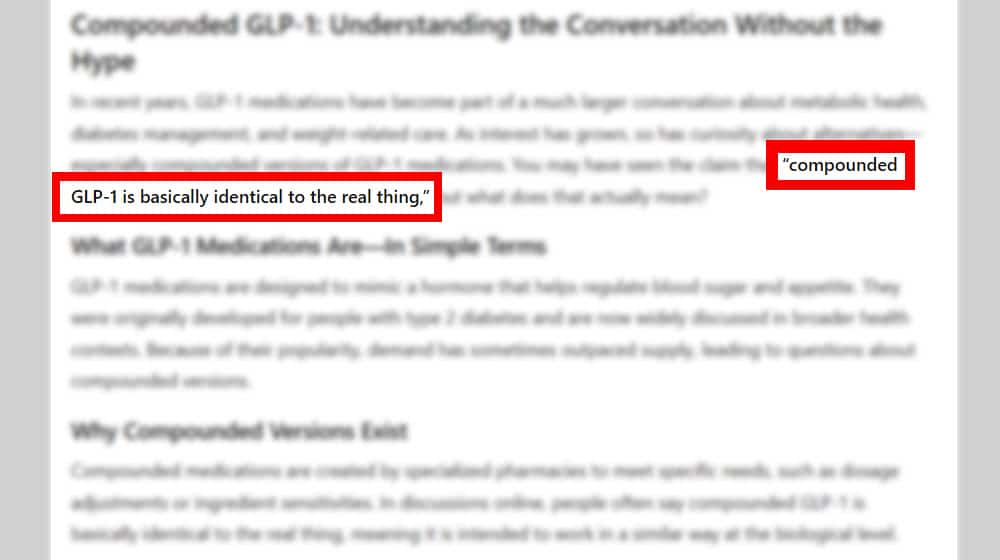
The critical detail here is that you can't say that a compounded GLP-1 is "basically identical to" the real thing, because that's substantively not true. People can and do experience serious side effects on compounded meds that aren't there with the real thing. It also refers to a different end result by the trademarked name, which is a big justification for trademark defense lawsuits.
Try to use the right trademark symbol when discussing branded terms. You might notice that I've added the ® when I mentioned Ozempic® in this post. I probably wouldn't get in trouble for leaving it off since there's no real risk of a patient confusing something I'm selling for it, but I wanted to demonstrate the right way to go about it for the purposes of this post.
Make sure you have a good legal disclaimer. A disclaimer isn't a magic spell to keep lawyers at bay, but it does matter. You'll want at least two: a long disclaimer specifically for a legal policy page, and a short disclaimer you can automatically add to your footer and your blog posts. A good short disclaimer might look something like:
Compounded medications are NOT FDA-approved and are different from brand-name medications. We are not affiliated with [drug manufacturer name], and we do not supply their products. Their trademarks are their own. This content is for educational purposes and is not meant to take the place of medical advice.
A long disclaimer is a whole page, so I'm not writing one here. Either way, you will generally want to consult with a lawyer to have one written for you, rather than just copying a template you find online.
Keep brand names off of your product pages. Unless you're a licensed and approved dealer of the real thing, don't mention the trademark's name anywhere near your product pages. If you produce a compounded version of a medication and you say something like "Just like [brand name]," you're in for a world of pain.
For Educational Purposes
The big trick here is that you essentially need to treat your blog and your business as separate entities. The business, including landing pages, product pages, and ads, can't mention anything you don't own a trademark to.
Your blog, meanwhile, can mention them, as long as you aren't making claims that are untrue, or tying it to your product pages. If you link to a page for a compounded GLP-1 while writing about Ozempic® specifically, you're going to get in trouble.
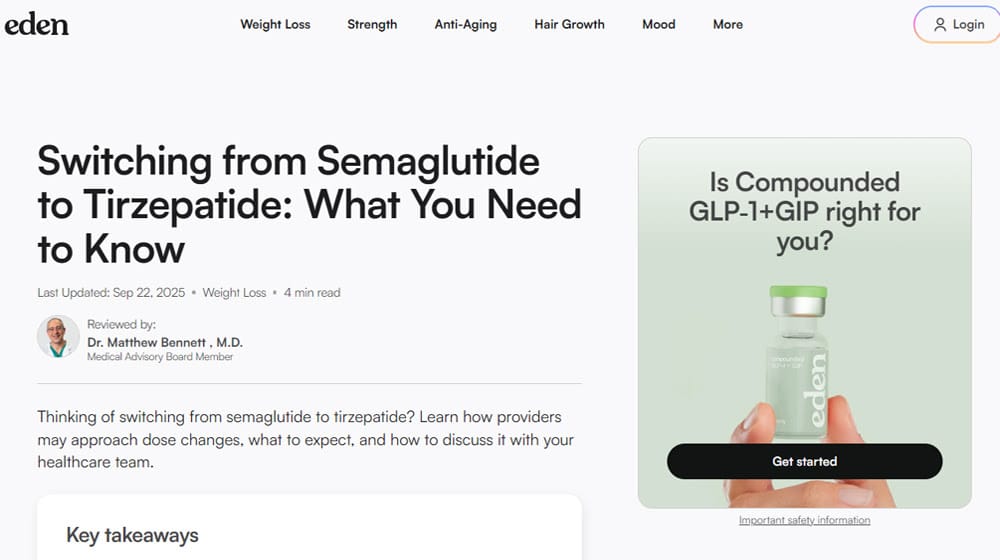
This is often why you find the big-name online pharmacies writing informational guides, where they mention the brand names, but don't link to products. Or, if they do, they make it clear they're linking to a compounded version. Here's an example.
Another thing that can get you into trouble is making claims that aren't true, which is why you generally see these sites linking to published studies and sources. These have to be first-party sources, too, so you see a lot of links to Novo Nordisk's or Eli Lilly's sites, or to the NIH or DOI pages. Sites like WebMD or Healthline don't cut it (though they can be good places to look to find sources they use to back up their claims, which you can copy).
How SEO Gets Around the Rules
The dirty secret here is that Google is kind of the accomplice in all of this. Well, Google, Bing, DuckDuckGo, ChatGPT, Perplexity, and all the rest.
Search engines like Google and the LLMs do a lot of natural language processing and semantic indexing. They also know that a person looking for information about GLP-1s and finding information about semaglutide or Ozempic® is going to be satisfied, most of the time. They're treated, at the SEO level, as essentially synonyms.
As long as you aren't the one treating them that way, you aren't going to get in trouble. And since Google is only providing the most relevant information to answer questions, they aren't going to get in trouble either. So it all kind of works out. You aren't really going to lose out in traffic for not mentioning the brand names, anyway, because your competitors also can't mention them.
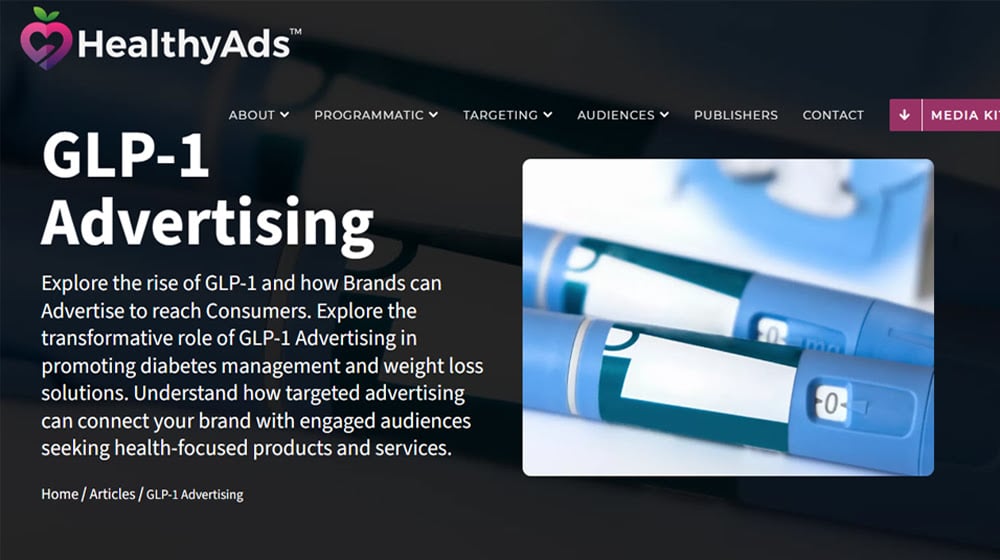
There's one piece of good news as well. More and more advertising is using GLP-1 instead of the brand names, specifically because of companies like Eden and Hims/Hers avoiding these issues. As of earlier this year, "GLP-1" surpassed the brand names in search volume. So you really aren't losing out for not mentioning them now.
Staying on the Safe Side
If you're a marketer working for clients in the health space, or if you're a blogger in that space doing your own marketing and you're afraid of an FDA letter or a C&D from Nordisk or Lilly, what should you do?
My biggest advice is just to strip out any reference to the brand names and other terms. Don't even mention them. Even if you can technically get away with it under the guise of educational content, it's very easy to cross over the line and get in trouble.
Tip: Do NOT just find-replace "semaglutide" with "GLP-1" across your site. This can lead to cases where you're now making false claims and citing studies that don't say what you now claim they do, and that's also going to get you in trouble.
There's a decent chance you'll need to audit your blog and remove a bunch of posts that can't be easily salvaged. You can always cover the topics in better ways later, but take them down now before you get in trouble.
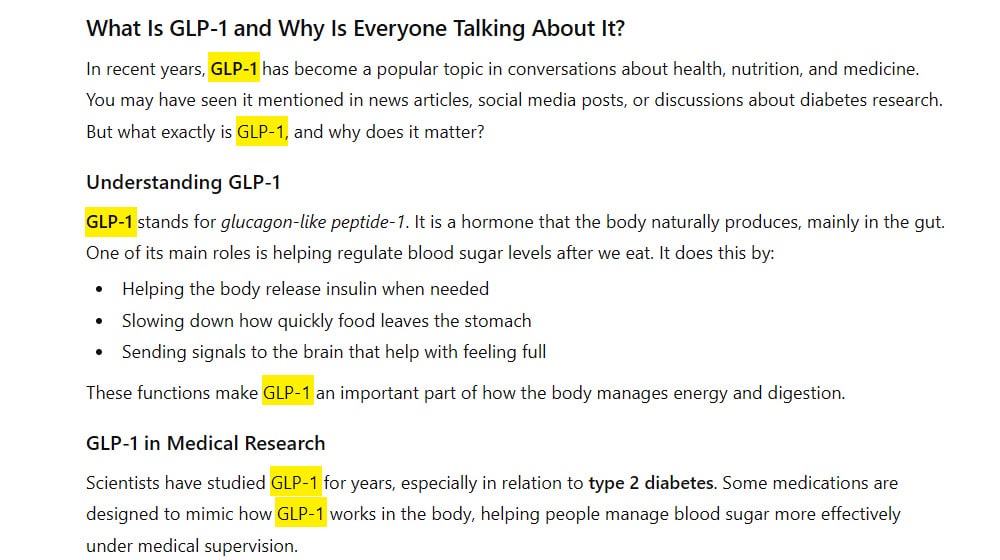
Instead, rely on the search engines to connect the dots. If someone goes to Google and asks about buying Ozempic® online, and Google provides your site, even though you don't even have the word Ozempic® on your domain and solely refer to them as GLP-1s, that's not your problem. You can't get in trouble for something you have explicitly not done.
And, of course, talk to a lawyer. They can advise you on the current regulatory atmosphere a lot better than my blog post can. The fact is, all of this has been changing every few months, and the waves of crackdowns are likely to change when patents expire next year as well. It's all something you need to pay attention to if you want to get it right.
At the end of the day, though, the key is just to be honest, truthful, and clear. Companies get in trouble when a customer could reasonably confuse their product for the real thing, and that holds true far beyond GLP-1s.
I also highly recommend erring on the side of caution. The current government has made it pretty clear that they want to pursue enforcement against certain kinds of medications and marketing both. Some of it is good, like cracking down on AI-generated content and ads, while some of it is… let's say unlikely to withstand scientific scrutiny in the future. Either way, though, it doesn't really matter what justification is behind an enforcement action; if the government says to stop doing something, you stop doing it.
You Got a Letter: Now What?
If you received a letter from the FDA or from one of the manufacturers demanding that you stop making certain claims or comparisons, what can you do?
Comply.
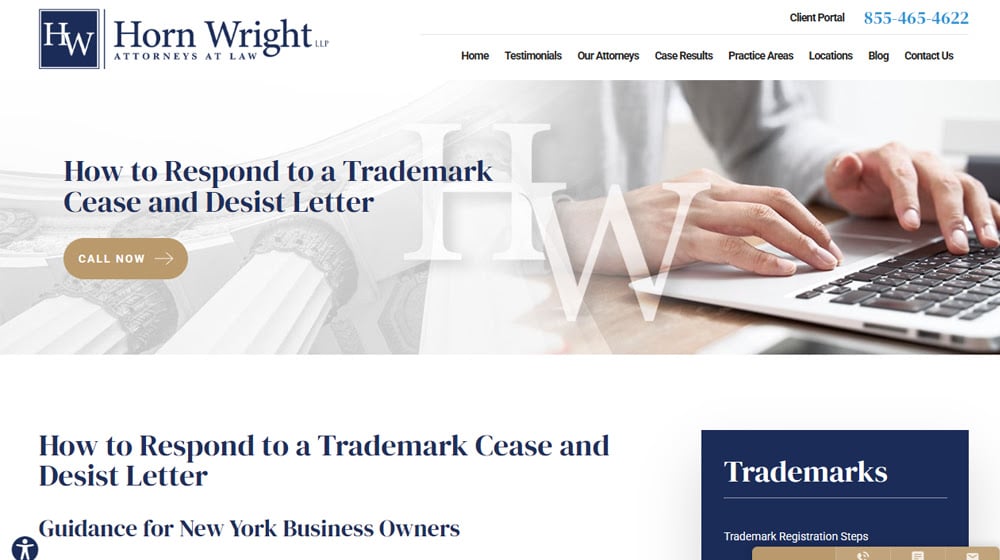
I would take a day or two to verify that the letter is real, first of all. I wouldn't be surprised if there are fake letters going around as scams to try to extort online pharmacies in times of stress like these. The FDA isn't going to demand monetary fees or fines to avoid punishment, for example. They'd just take you to court.
After that, though, just do what they ask. Audit your site, content and product pages alike. Find anything that fits the pattern they call out, since they'll give you examples of infringing content but won't lay it all out for you. Fix those issues. Make note of them to avoid them, and inform any marketing agencies you use.
Also, talk to a lawyer. Always consult a lawyer for legal issues like these, especially if a lawsuit is at stake. Because, really, that's the only recourse you have to "fight back" or defend yourself. If you think you're in the right? Well, you need to prove it in court. Even if you win, though, it will be costly and time-consuming, and that means it's not worth it.

Written by James Parsons
Hi, I'm James Parsons! I founded Content Powered, a content marketing agency where I partner with businesses to help them grow through strategic content. With nearly twenty years of SEO and content marketing experience, I've had the joy of helping companies connect with their audiences in meaningful ways. I started my journey by building and growing several successful eCommerce companies solely through content marketing, and I love to share what I've learned along the way. You'll find my thoughts and insights in publications like Search Engine Watch, Search Engine Journal, Forbes, Entrepreneur, and Inc, among others. I've been fortunate to work with wonderful clients ranging from growing businesses to Fortune 500 companies like eBay and Expedia, and helping them shape their content strategies. My focus is on creating optimized content that resonates and converts. I'd love to connect – the best way to contact me is by scheduling a call or by email.





Comments