

5 Reasons Why Your Service Pages Aren't Ranking on Google
Written by 

Getting service pages to rank on Google can be surprisingly tricky.
On one hand, service pages are often relatively thin and very focused on commerce, which isn't usually what Google wants to have ranking for most queries. Service pages can easily fall afoul of "thin content" and lack of originality rules, though less so than they used to.
On the other hand, when a user is searching for a service, they probably want to find service pages, not a bunch of blog posts talking about why the service is good, or comparative charts between competing services, or homepages.
Service pages are content for a specific kind of user intent.
- Navigational intent wants homepages, and anything else is extraneous.
- Informational intent wants resources, blog posts, wiki pages, knowledge bases, and the like.
- Tutorial intent wants resources, blog posts, instruction manuals, guidebooks, and similar.
- Commercial intent wants comparative pages, reviews, and other resources to evaluate a service.
- Transactional intent wants service or store pages.
Transactional intent is, realistically, going to be a relatively small fraction of your overall traffic. But, it's also extremely important traffic, because it's people who have more or less decided they want to buy or subscribe to your service. You want them to be able to find your service pages, then, otherwise, the added step of friction might make them less likely to purchase.
So, it's obviously a concern if your service pages aren't ranking on Google. Why might that be the case, and what can you do to fix it? I've put together a list of the five most common reasons to check, and advice on how to fix them.
Reason #0: You're Checking the Wrong Kinds of Searches
Before I get into the actual reasons, I need to mention this, which is: you need to be checking for the right kinds of ranking. Again, this comes down to search intent.
Different queries, even if they could potentially be fulfilled by your service page, aren't always going to have "a service page" as the right kind of answer. Someone asking for instructions on how to complete a task isn't going to want to land on a service page selling itself as the solution. That's true even if the service page includes instructions on how to use the service to complete the task.
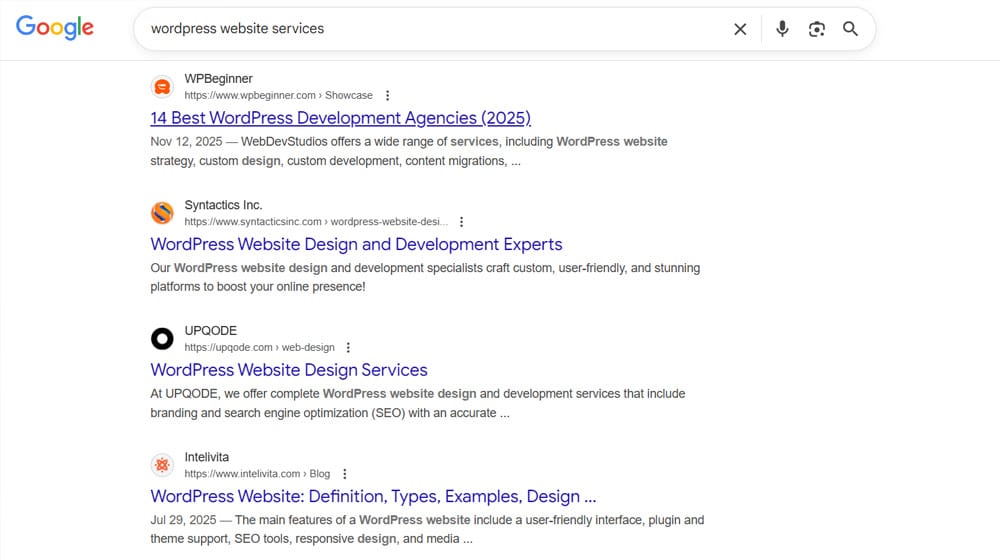
So, if you're checking if you rank for generic industry terms, or if you're ranking for tutorial or informational queries, and your service pages aren't ranking… that might not be bad. Certainly, you could benefit from ranking for those queries, but it might actually be better to rank a blog post, landing page, or comparison page instead.
Now, if your service pages aren't ranking for queries that clearly should bring them up, and especially for queries where you should be out-ranking your competitors (such as branded queries), then you have a problem to sort out.
Reason #1: Your Service Pages Have Too Little Content
One of the biggest reasons that service pages fail to rank is simply that they're too thin.
Now, "thin content" has been a boogeyman in SEO circles for almost 15 years, and with good reason. Before Panda and Penguin, a lot of websites were ranking with copy-and-pasted pages with 150 words of "content" and a bunch of keywords. That was pretty terrible for people trying to find actual information and services, which is a big part of why those algorithms were made.
Trying to get as far away from thin content as possible is why blog posts tend to be 1,500 words minimum, and more in the 2,000-3,000 range these days, with longer exceptions for pillar posts and major resources.
Service pages, while not entirely exempt from thin content, don't need to be held to quite that high a standard. You aren't going to be penalized for having a reasonable service page. There's only so much you can say about gutters or mouse traps or whatever product without getting really into the weeds.
On top of that, Google generally isn't likely to penalize individual pages for being too thin these days. They go for entire sites that use nothing but thin content. If the rest of your site is reasonably robust, and your service pages are good enough to convey what your service is and how to get it, that's often good enough.
Now, if your service page is really thin, you might have trouble. If there's not even enough information on it for a prospective customer to know what they're getting or how to get it, you have issues. At the same time, though, you probably have bigger problems than just not ranking if you're that thin about your core services.
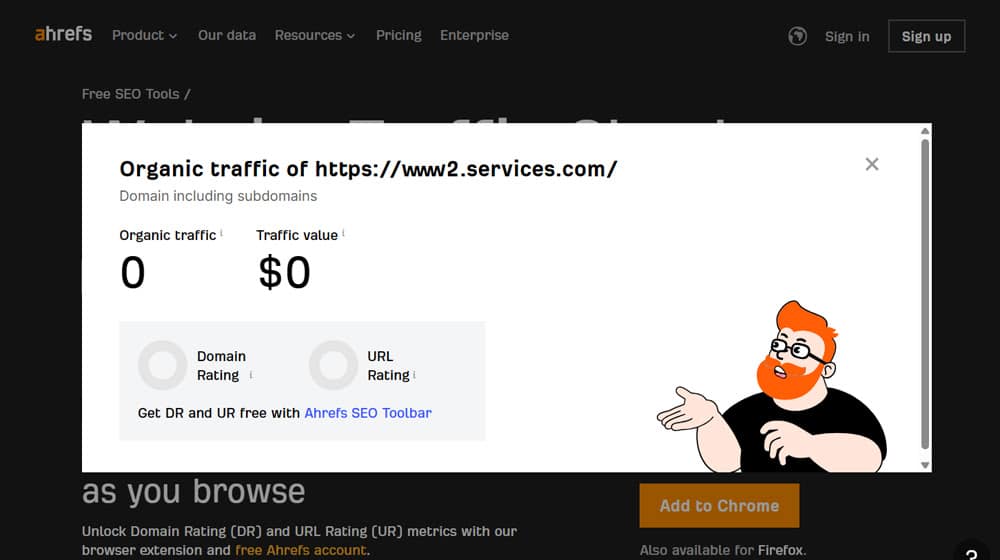
Take a site like Ahrefs. Here's a service page for their traffic checker function. If you ignore the footer that's identical on every page, and the header navigation likewise, that page has a whopping 300 words of content on it. It doesn't need much to be a valid service page.
Reason #2: You're Targeting the Wrong Keywords
This one is sort of congruent with reason #0 above, but from the other angle. You need to make sure the keywords you're using on your service pages are the same keywords your users would be using to find you.
Think about those euphemistic names for things that popped up a lot in the early 2000s and still show up now and then. Things like "sanitation engineer" instead of janitor, or "content production guru" instead of writer, or what have you.
If you wrote a whole page about sanitation engineering, yeah, you're not going to rank, at least not for janitorial services. You might rank for people searching for legitimate engineering of sanitation systems and pipelines, but that's not what you want for a cleaning service or junk hauler.
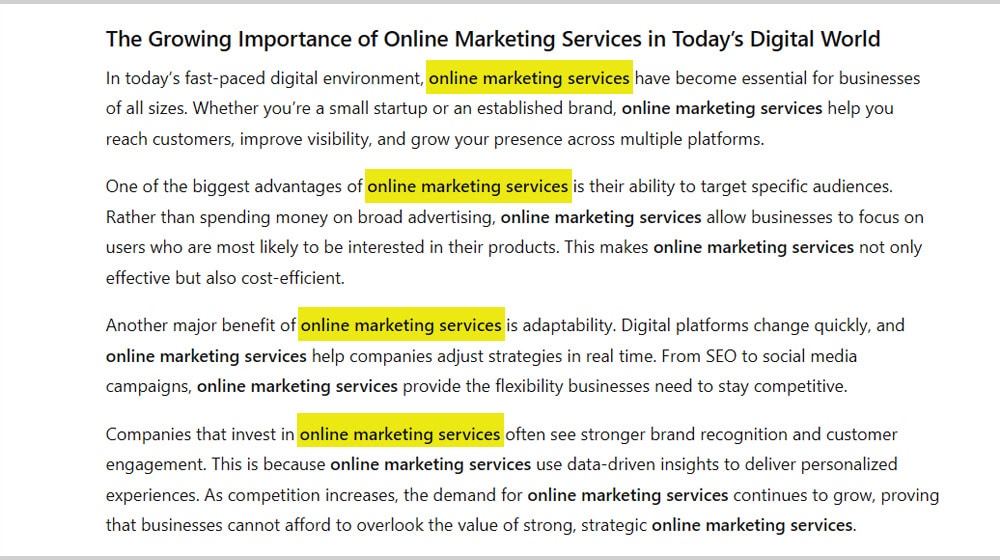
This can happen to any industry, and it doesn't have to be something as disconnected as those examples. Even having a service page for "digital growth services" is a lot less likely to rank than one just for "online marketing services," even if it's the same thing.
Keep in mind, as well, that even if your page does rank for that euphemistic term, users seeing it in the search results might not click if they don't recognize it. You could be shooting yourself in the foot just as much that way as well.
Reason #3: You're Not Leveraging Technical Details
There are a lot of little things you can do to make your service pages more robust and more likely to rank. I go over them in greater detail in my guide to service page SEO, but here's a quick list you can use to check if you have them or if you can use them if you don't have them already.
A strong hierarchy within your services. Assuming you have multiple services or multiple locations, you want a strong organizational structure so a person landing at the top level can quickly drill to the one specific to their needs, and so that Google's personalization can give them the specific sub-page because they understand your structure.
Specific and relevant content for the service and location, especially for local pages. It can help a lot to mention local neighborhoods, streets, common names, and other terms locals might use.
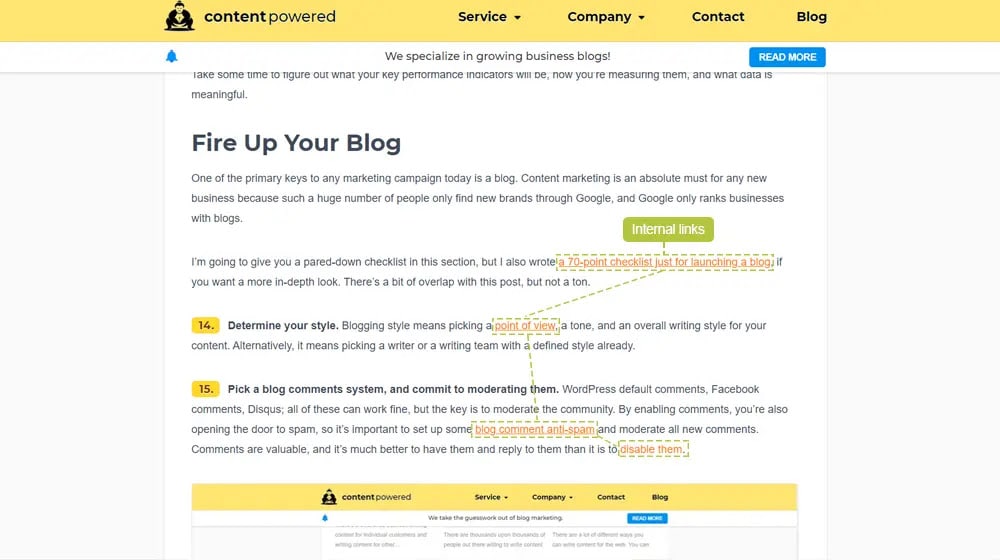
Strong internal links from blog posts and elsewhere, pointing at your service pages. Don't just rely on navigation and footer links; use organic links throughout your content as well.
Business information, including NAP, contact information, and operating hours. All of this should be visible and usable, possibly even with mailto: or tel: links as relevant. Obviously, only include what's important; if your service is a product that can be accessed at any time, hours of operation aren't relevant, for example.
Schema. Yes, there's schema markup for service pages, and yes, you should use it whenever possible. That alone can be a good sign that your service pages should rank higher to Google.
Social proof. For service pages, this generally means reviews and testimonials, though you can occasionally also use follower counts and sharing tags. Anything, really, that proves your service is used and loved is important to add. Client brand logos, reviews on third-party sites, and even numerical counts of users can be powerful as well.
Updated content. Even if your service hasn't changed in years, you want your service page to change, at least in small ways. It's one of the few "change for the sake of change" things in SEO; Google likes fresh pages, users hate finding businesses that are closed but still have lingering websites, so keeping your pages updated shows you're still active.
This is all relatively specific to service pages. You can also go through the whole technical SEO checklist and look for fast loading times, mobile compatibility, user accessibility, and all the other details as well. Service pages may be a particular kind of page, but they are still webpages and still need to meet all of those criteria.
Reason #4: There's a Disconnect Between Off- and On-Site Information
I already mentioned NAP and other business information as something to have on your service pages. But that same information can be holding you back.
How? Disconnect.
Usually, I see this with things like address, hours of operation, or contact information. Things that can change from time to time, but which can be hard to remember to update everywhere.
Think about all the places that have your business hours. Your website, of course. Your Google Business Profile. Your social media pages, particularly Facebook. Other third-party business profiles, like Yelp.
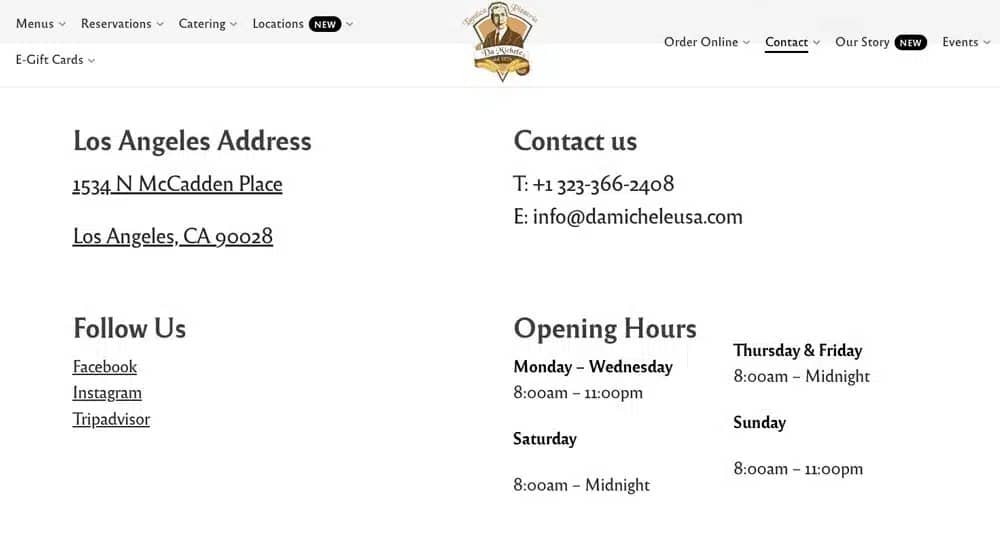
Now think about a user searching for your hours and finding conflicting information. Ouch, right? I know I always hate finding a business listing saying a business is open, only to find the doors closed and the lights off when I visit.
The same can happen for other information as well. Names of services, pricing information, and anything that is present on both your service page and off-site pages need to be the same.
I always recommend keeping a list of all of the third-party profiles and sites you have. Even if you don't actively use them, make sure to log into them and update the information periodically.
What about information on third-party sites you don't control? There are plenty of scrapers, as well as third-party brands that write about you, and that information can fall out of date over time. But, since you can't just go change it, what can you do?
Honestly, either send the site owner a message to update it (with links and new information so it's easy for them to do), or ignore it. Google is smart enough to tell the difference between something you've neglected and something you don't control.
Reason #5: Your Site as a Whole Isn't Ranking
I've seen this one happen a couple of times. A business owner comes to me asking why their service pages aren't ranking. I look, and I find: nothing of theirs is ranking. It's not just their service pages, but they hadn't looked at the rest.
Service pages aren't standing on their own. They're part of a whole site. That means the rest of your site also needs to be good and consistent if you want your service pages to rank.
- Check your overall keyword strategy. Same deal; is it the keywords people are actually using, or not?
- Check metadata usage. Even simple things like making sure the main point of the page is in front of your brand name can be helpful.
- Check for technical SEO elements. Schema and all the other technical elements add up across a whole site.
Content quality is important, of course. Building backlinks and citations is also important. You want all of the main SEO metrics pointing just as much at your service pages as at other pages.
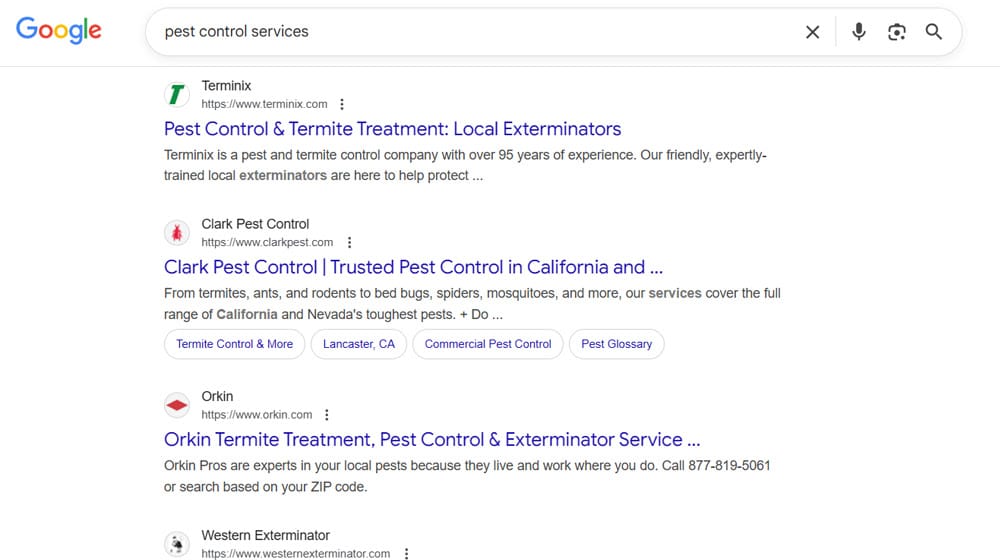
Remember, too, that different kinds of sites have different advantages. Local businesses can leverage a lot more local flair. Larger businesses can make use of franchise locations for compounding service page benefits. Big brands can pull in a wider array of positive testimonials. Use the resources you have available to you.
When in doubt, look at the service pages your competitors are using and try to include similar content. You don't have to replicate their design wholesale, obviously, but having something that checks all the same boxes is a good place to start.
If you're really stumped, you can also drop me a line. I love to help people get their sites up to speed, so check out what I can do for you.

Written by James Parsons
Hi, I'm James Parsons! I founded Content Powered, a content marketing agency where I partner with businesses to help them grow through strategic content. With nearly twenty years of SEO and content marketing experience, I've had the joy of helping companies connect with their audiences in meaningful ways. I started my journey by building and growing several successful eCommerce companies solely through content marketing, and I love to share what I've learned along the way. You'll find my thoughts and insights in publications like Search Engine Watch, Search Engine Journal, Forbes, Entrepreneur, and Inc, among others. I've been fortunate to work with wonderful clients ranging from growing businesses to Fortune 500 companies like eBay and Expedia, and helping them shape their content strategies. My focus is on creating optimized content that resonates and converts. I'd love to connect – the best way to contact me is by scheduling a call or by email.





Comments