Should You Bid on Competitor Brand Names in Google Ads?
Written by 
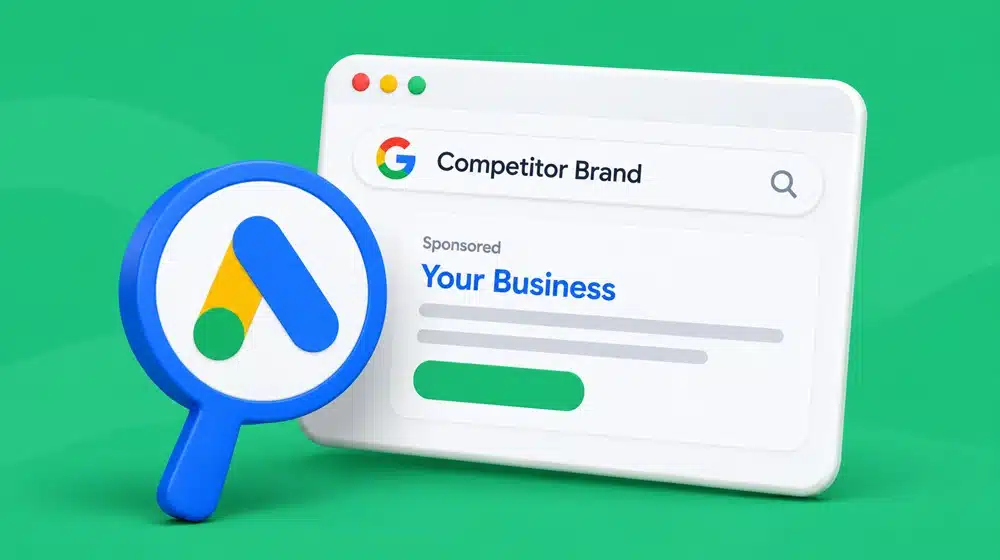
One question that I'm asked almost every time a client signs up for my PPC ads management service is whether or not we should bid on brand names as keywords.
I'll warn you up front: this article is going to seem pretty negative, but I actually have a fairly positive outlook on the idea. I'll get to why as we go, though, so read on for the full reasoning.
What do You Get Out of Bidding on Competitor Brand Names?
First, let's talk about what you might get out of bidding on a competitor brand name as a keyword. There has to be some reason why people recommend doing it, right?
One of the main benefits is that it's a keyword you can target that you already know is part of your overall marketing ecosystem, which has a lower cost per click than more generic keywords. Since cost per click is largely determined by competition in the ad auctions, and fewer people are bidding on branded keywords, the cost to show up is lower.
Brand name keywords also tend to have a fairly high search intent. They're less likely to be general informational or tutorial intent. The user is searching for a competitor brand name, which means they know enough to know about brand names, which means they're deeper in the funnel than the average user.

An often-cited benefit is that you build more brand awareness. I'm a little skeptical of this one, but I can see the theory. If someone has only just heard of a brand and wants to look into it and what they do, they might not have awareness of the industry. Learning that this brand isn't the only brand in the space can bring some traffic your way.
Overall, the theory is that you're intercepting competitor traffic, directing it your way, and scraping off some potential sales that otherwise would have gone to your competitor. It's kind of like setting up a pop-up booth for your company outside your competitor's storefront.
Why Bidding on Competitor Brand Names Isn't Valuable
I think the benefits are a little overblown, and the risks are significant.
- Bids may be cheap, but it doesn't matter how cheap they are if they don't convert.
- Competitor-branded search intent is rarely going to swing towards you in a favorable way.
- Brand awareness can be built in many other ways, including organically and through the AI overviews.
On top of that, you have other concerns.
You have to follow strict rules surrounding trademarks.
Google has pretty strict rules surrounding the use of trademarks in ads. You're free to use a trademarked brand name in the keyword list you're targeting, but you can run into trouble if you use it in the ad copy.

I don't know about you, but I don't trust a lot of PPC companies to know the ins and outs of trademark law. A lot of them end up offloading the day-to-day management to overseas contractors, or just have AI generate copy, neither of which is likely to know where the line is and what happens if they cross it.
In the worst case, this can get your Google Ads account suspended, and then you're in for a world of pain as you try to fix the problem for a now very irate client.
You risk violating the likelihood of confusion test.
The likelihood of confusion test is a test in trademark law that is used to determine whether or not you're violating said law. If your ad copy looks a little too much like you might be portraying yourself as a representative of the brand, rather than a competitor or distinct entity, you can get in serious legal trouble.

Worse, this isn't automatic. It requires that your competitor notices the problematic ads, and decides to take legal action to defend their trademarks. I know more than a couple of cases in the past where PPC firms have thought they're fine because "they've been doing it that way forever", only to get slapped with very sizable judgments. In other words, you don't find out you've been doing it wrong until it's far, far too late to do anything about it.
When someone is searching for a brand name, a huge majority of the time, they just want to go to that brand's website. I don't care how compelling your ad copy is, you aren't going to capture those clicks.

And, if anyone does click your ad, they'll bounce immediately, eating up your ad budget for nothing.
You risk losing money to fruitless bid wars.
This is another one I've seen a few times. You decide to bid on a competitor brand name as a keyword, and start getting ranked, possibly even ranked above their own ads. Cool, right?
They notice, then they start bidding until they outdo you. Maybe you let this happen, or maybe you increase your bid until you win again, and this goes back and forth until someone gives up and settles for second place.
By then, you're not exactly taking advantage of under-costed ads anymore, are you?

Worse, some brands get aggressive about it. They turn around and start bidding on your brand name, and the same thing happens there. Maybe they also use tools to identify your top-performing PPC keywords and start trying to drive up your costs there too. You can end up running out of a whole lot of budget very quickly this way. If you're concerned about why your Google Ads aren't reaching your full daily budget, bid wars like these can be a contributing factor.
It's worse when the competitor happens to have a sizable marketing budget and can financially crush you. You really don't have a way to compete in this scenario.
It can negatively affect your overall quality score.
Google Ads uses a quality score to determine factors like your costs and your visibility. The lower your quality score, the more expensive your ads will be across the board.

Quality score is made up of a lot of factors, but some of them are very relevant to this discussion. In particular:
- Expected click-through rate. Bidding on a competitor brand name is going to have a low eCTR for your brand.
- Ad relevance. This can be arguable with some ads, but pure brand name keywords have a high bar to clear.
- Historical performance. Account-wide, how well your ads perform is a predictor of how well future ads will perform, and that can affect how much Google wants to put yours up top.
This wouldn't be a problem if it just affected those ads. But since quality score affects your whole account, it can make all of your ads a little worse.
All of this is a lot of risk for ads that you already don't expect to get a lot out of.
Why Bidding on Competitor Brand Names is Still Worth Doing
Alright, I already mentioned that I was going to come around on the idea. Here's why.
When you do it right, you can get some incredibly focused and high-quality clicks out of competitor brand names.
The trick is, you really have to be careful with what you do. Almost all of the pitfalls I've just listed are avoidable.

It gives you a great opportunity for an elevator pitch as a competitor. Sure, a lot of people using branded searches like this have already done their research and made their decisions. But not all of them have, and the ones that haven't are a good audience to reach. They're searching for the brand, so they're already interested in the industry. You can use your ads to give a focused and powerful pitch on why someone should consider you.
You can point out pain points in your competitors. You probably already know what pain points people have with your competition, since they're points you focus on in your marketing as reasons why people should go with you. You can run ads like "Tired of doing X, Y, and Z? Try us." Reminding users of the frustration they experience using a competitor, with an alternative a click away, can be a good way to pull in traffic.
It's also good if you're a newcomer to the space. The brand awareness bit might not be useful to established companies, but if you're newly launched, either as a competitive product or as a business entirely, this can be a good avenue to get your name out to people who might not have heard of you before.
It's useful when your competitors are enormous. This is risky, though. If your competition is huge, you can be beneath their notice, and they might not care that you're bidding on their brand name since you represent such a small competition. Meanwhile, their brand name is likely much higher volume than your normal keywords, so you can get a good deal of exposure. On the other hand, if they do turn their baleful eye towards your ad budget, you've lost before you begin. Smart bidding and budget caps can keep you from wasting too much money, though.
What About Bidding on Your Own Brand Name?
The flip side to this discussion is bidding on your own brand name. Personally, I tend to find this a lot less useful.
So, here's the thing. When you run ads for your own brand name, you get a very high click-through rate, a high conversion rate, and a lot of very positive metrics. By every screen on the dashboard, they're a huge success.
Think about it from the user's perspective, though. They typed in your brand name, and they clicked through to your site. That's something they planned to do.
You paid for them to do it.
But what if you hadn't run those ads? There's a 99% chance that they would have scrolled down and clicked on your organic link, which should be #1 for your brand name regardless. You're paying for something that was going to happen for free.
Yet, I see a ton of PPC companies doing this. It's often one of the first ads they run. I've seen it a lot with my clients, particularly when I do the blog marketing and someone else is handling their PPC.

Why do PPC companies do this? Well, I've already said. "By every screen on the dashboard, they're a huge success."
Without the context, it's easy to generate a report showing just how awesome your ads are, which is a goldmine for a PPC firm looking to build goodwill with their clients. If those clients see a corresponding drop in organic traffic from their brand name keyword, well, maybe they don't notice, or they don't put 2 and 2 together.
Frankly, I think this is kind of scummy behavior.
One argument I've seen is that "if we don't bid for our name, our competitors will." And sure, maybe that's true. And maybe you will lose a handful of customers to it. But that same likelihood exists with organic search results, with AI overviews, with product results, and everything else.
Is it worth the bid to save that traffic, considering how much you'll pay for clicks you'd already be getting? I don't think so, but you're free to make the calculation for yourself.
The only reason to run these PPC ads for your own brand name, without other modifiers, is if you want to funnel traffic to a landing page instead of your homepage. But, in that case, you should probably be thinking about redesigning your homepage.
Bidding on Competitor Keywords the Right Way
If you're determined to bid on competitor brand names, you need to do it properly.
See, the number one issue isn't even just the possible trademark confusion or the low click-through rates, or anything else.
It's the secondary outcomes.
When a user performs a search for a competitor brand name, and they click on your page, what happens? Do they browse your page? Do they sign up for services? Do they schedule a sales call?
Those outcomes are good, of course. But what happens next?

There's a fundamental disconnect here, which can get in the way of successful conversions.
- If a user thinks they're scheduling a service call with a brand and you show up, they're going to feel like they were baited and switched.
- If a user thinks they're reaching out to a brand they have a relationship with, you don't have that information, and you can't help them.
- If a user is hoping to log into a brand dashboard, and they try to log into yours, they're going to fail and have a bad time about it.
In the worst cases, they can think you're phishing them or otherwise trying to scam them. A lot of people don't pay nearly as much attention as you would hope to the things they click.
You need to be very focused and very clear with what value proposition you're presenting to the people searching for a competitor brand name. Any confusion is bad. You can capture traffic and even poach customers, but it needs to be done properly or not at all. It's not easy, but it's valuable when you can pull it off.

Written by James Parsons
Hi, I'm James Parsons! I founded Content Powered, a content marketing agency where I partner with businesses to help them grow through strategic content. With nearly twenty years of SEO and content marketing experience, I've had the joy of helping companies connect with their audiences in meaningful ways. I started my journey by building and growing several successful eCommerce companies solely through content marketing, and I love to share what I've learned along the way. You'll find my thoughts and insights in publications like Search Engine Watch, Search Engine Journal, Forbes, Entrepreneur, and Inc, among others. I've been fortunate to work with wonderful clients ranging from growing businesses to Fortune 500 companies like eBay and Expedia, and helping them shape their content strategies. My focus is on creating optimized content that resonates and converts. I'd love to connect – the best way to contact me is by scheduling a call or by email.