
What Are The Best Newsletter Platforms to Use in 2026?
Written by 

I and many other marketers have said for years that a newsletter is one of your best resources as a marketer.
There are a couple of big reasons for this.
For one thing, newsletter subscribers are people who have already expressed interest in you to a significant degree. Casual users don't opt in, let alone confirm subscriptions. These people, at bare minimum, want to hear what you have to say, or claim offers you give out.
For another, it's an audience and a channel you completely control. Sure, you can end up marked as spam if you do things wrong, but generally, you aren't beholden to a third-party company. On Facebook, Meta could ban you for no reason with no recourse. On Google, an algorithm update can nuke your traffic. Any channel relying on a third-party platform can evaporate, bringing your audience with it.
A newsletter is a list you keep. Even if a newsletter platform bans you for some reason, you can still import your list into a different one.
So, what is the best newsletter platform to use? I put together my list of favorites.
Key Takeaways
- Newsletters are valuable because subscribers are highly engaged and you own the list, independent of third-party platforms.
- Key platform features to evaluate include email editing, automation, segmentation, form management, pricing, and whitelabeling options.
- Beehiiv and Ghost combine newsletter tools with website/blog building, while Kit stands out for its creator recommendation monetization system.
- ActiveCampaign, Brevo, and Klaviyo have heavily integrated AI and omnichannel marketing, making them better suited for experienced marketers.
- Mailchimp, despite being widely known, has fallen behind competitors in value for price and is no longer the top recommendation.
Before getting into the list itself, let's talk about what you should look for (and what you should avoid) when you're checking out these platforms.
Truthfully, any one on this list is going to be fine for most people. If you're fine with basic text emails or you're comfortable enough with email code to make your own, all of these will send emails to a list just fine.
What sets these apart, and why would you want to choose one over another?
It largely depends on your specific needs. Some are better for WYSIWYG email editing. Some have more automation features. Some roll in the website-side form builders and landing page creators. Some have more audience management features. Your choice, then, comes down to which of these features is a priority for you.
And, of course, there's the price. Sending out mass emails legitimately costs money, which is why free plans typically have limits. If budget is your biggest concern, you can choose along those lines, too.
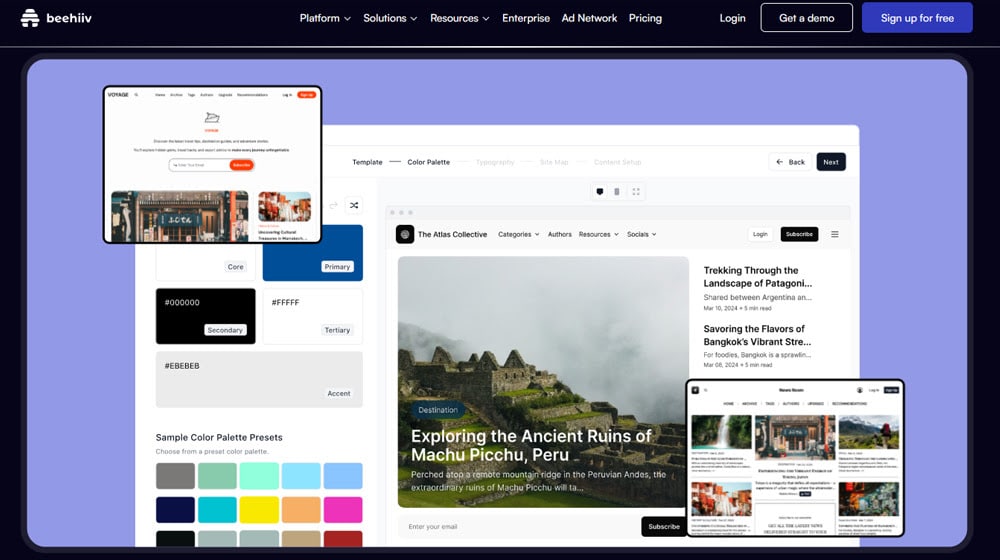
Major factors to consider when you're evaluating these platforms can include:
- Easy email editing. Hand-coding is fine, but a drag-and-drop editor with plenty of templates and customizations is easier and better for most people.
- Effective automation. New user drip campaigns, autoresponders, flexible or keyword-based automation, and hookups to engines like Zapier can all be beneficial.
- Form management. While you can always use a secondary tool for forms and opt-in processes, having one that's built into your newsletter platform can ensure as little disconnect or room for error as possible.
- Audience segmentation. Being able to divide your audience for split testing or along demographic or category lines helps you target more effective email marketing.
- Pricing and scaling. Most of the platforms I list have a free plan or free trial, but you still want to compare pricing and see how well it scales as you grow your list.
- Whitelabeling. Do you care whether or not your emails have "email sent by [brandname] on them, or do you want solely your own branding? Most platforms offer white-label at a higher price point, so be sure you know what that is if you need it.
Some of these lists will also include deliverability rates, but I don't, for three reasons. One: the information can be hard to find, and can be contextual based on sender anyways. Two: the information you find on it can be unreliable and can change rapidly enough that it's not terribly useful. And three: all of the platforms I list are going to be good enough. Low deliverability tends to be more of a problem with small-scale operations, and these are all proven platforms.
Now, let's get to my list. All ten of these are great options, so while I've sorted them in order by my favorite to my least favorite, I've used and like all of these and wouldn't consider any of them "bad" at all.
Also, as you read, note that I'm using 1,000 contacts as a baseline for price comparisons when possible. All of these have scalable plans, so you can stay at a Starter with higher numbers of contacts for a higher price, rather than having to jump up to an advanced plan to increase the numbers.
1: Beehiiv
Beehiiv is a combination of newsletter and site builder. It's one of the more recent innovations in the newsletter space, and competes with sites like Medium, Substack, and even Patreon. You can send out your content as email newsletters, but you can also post it publicly on the internet, or as gated content behind a paywall or monetized with ads.
As a newsletter platform, it has all the core features you'd expect, including content creation through a visual editor, various growth tools like pop-overs and referral programs, data analysis and management tools like analytics, split testing, and user validation, and so on. It also has a variety of monetization options for your content, including display ads, paid subscriptions, direct sponsorships, and more.
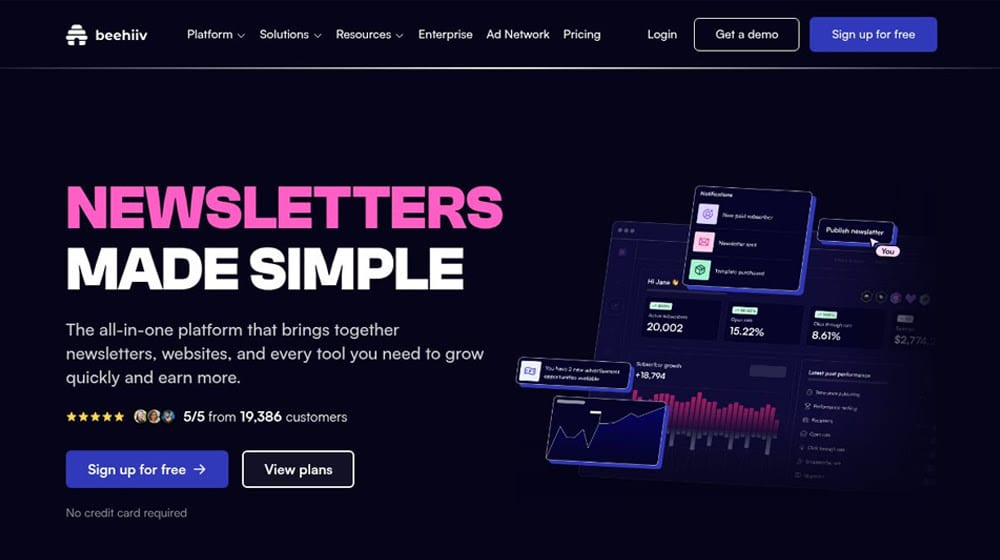
Pricing-wise, Beehiiv has four tiers.
Launch. This is your $0 plan with up to 2,500 subscribers. You get basics like the website, newsletters, analytics, and some core marketing features. Critically, you aren't capped on email sends, just on subscribers.
Scale. This plan starts at $43 per month for up to 1,000 subscribers, but you can increase the cap for a higher fee. 2,500 subscribers is $61 per month, for example. This gives you everything in the free plan, plus access to monetization, digital products, automations, webhooks, and more. It's your core business email offering.
Max. This is your "top tier" plan that costs around double the Scale plan, and gives you whitelabel emails and sites, as well as advanced features like podcast websites and audio newsletters, RSS-to-send, separate distinct publications, and more.
Enterprise. If you're a big business and want a concierge to onboard you, want a dedicated staff member to handle any questions you have, and so on, this is for you.
2: Kit
Kit is a relatively lightweight and automation-focused email and newsletter management platform. It does landing pages, but it isn't as full-on "a blogging platform" the way Beehiiv is, but it's really centered on the email aspect of running a newsletter.
Kit allows you to spin up a flowchart for how to handle new subscribers with a visual editor, and keep the flow going with Zapier-like trigger-and-effect automation. When events happen, you can send email sequences, add delays, alter tags, move subscribers to other lists, and more. Basically, it's a lot of stuff that you would need to do manually with most other platforms, but can automate here.
Kit has one unique innovation, which is its monetization. The first is a micro-store, where you can sell digital products pretty much directly through your emails (and a small microsite for the checkout process).
The second, and perhaps most interesting, is a recommendation process for other Kit users. You can include a module in your emails so that your emails recommend other creators using Kit, filtered by tags and type of content, so it's relevant to the interests of your fans.
When you display this in your emails, if users sign up for those newsletters too, you get paid. You can also take advantage of it from the other side and get more subscribers by being recommended in other newsletters. If you're weighing whether to focus on written content at all, it's worth reading about the pros and cons of blogging versus vlogging before committing to a platform.
Kit has three tiers of pricing.
Newsletter. This is the free plan that caps you at 10,000 subscribers. You get one automation, one email sequence, unlimited landing pages, forms, and broadcasts, basic audience tagging and segmentation, and API access.
They offer you a lot in this plan because you're required to add the recommendations section, so you become a marketing vector for paid customers. But you do get to run paid newsletters, paid subscriptions, and even the store, so it works out.
Creator. Starting at $33/month for 1,000 subscribers, this adds unlimited automations and email sequences, the option for recommendations that pay you when you include them, whitelabel emailing, and apps.
Creator Pro. Double the cost at $66 per month for 1,000 subscribers, this gives you the advanced split testing, the option to use custom audiences from Facebook, a referral system for newsletters, and some more advanced metrics, including deliverability reporting.
Both paid plans give you access to the Kit App Store, which has a bunch of third-party apps that add features to your newsletters. These can range from custom fonts to Canva to audio emails to Giphy support and more. It makes Kit very flexible. Right now, they have a bit over 40 apps, with more being added as they grow.
3: ActiveCampaign
ActiveCampaign is one of the older email management platforms, but it's pivoted pretty hard towards AI-based automation in the last couple of years. Some people love it, some hate it, and some are indifferent.
Personally, I think it's too big a shift if you're familiar with email marketing already, and the AI doesn't add much you didn't already know how to access. But if you're new to email marketing, being able to ask for things in plain language and have an AI help out can be nice.
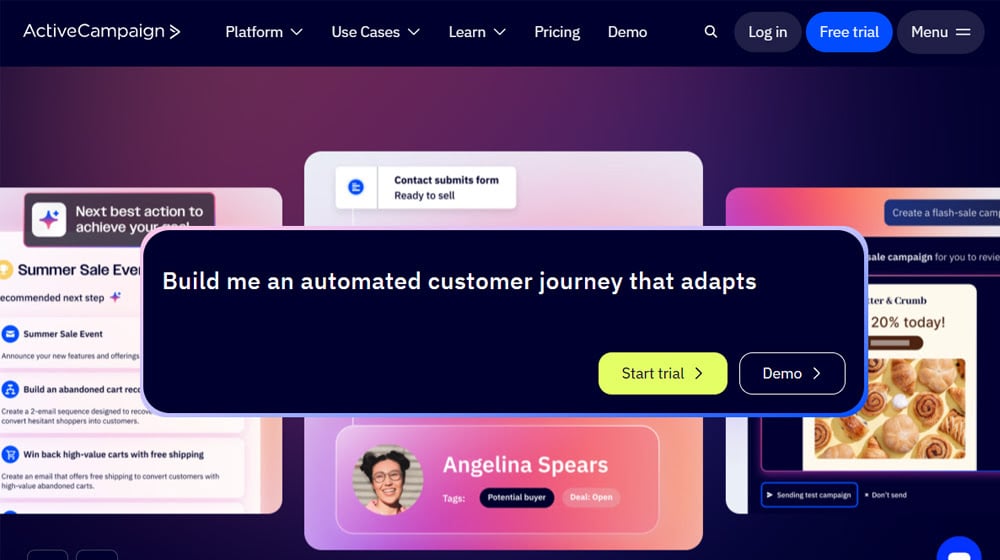
ActiveCampaign does not have a free plan, just a 14-day free trial. They have four paid plans:
- Starter. $15/month for 1,000 contacts, this caps you at 10x the contact limit for email sends, gives you automation but limited to five actions per flow, gives you basic split testing, limited segmentation, and a basic CRM. You do get access to their long history of nearly a thousand third-party integrations, at least.
- Plus. $50/month, this uncaps your automations, adds in landing pages and templates, gives you retargeting, and adds in generative AI access.
- Pro. $80/month, this one bumps your email sends to 12x your contact limit, adds in conditional content and predictive sending, and conversion tracking features.
- Enterprise. $145/month, you get even more sends (but not unlimited), custom objects, premium integrations with platforms like Salesforce, and some enterprise features like single sign-on.
If you're all-in on the AI bandwagon and want a newsletter platform that believes the same way you do, this is probably your best option.
4: MailerLite
Despite the Lite in the name, MailerLite isn't all that lightweight. It is, however, pretty much your "bog standard" email marketing platform. You get emails, you get basic automations, you get a newsletter designer and drag-and-drop editor, you get email notifications, you get a site builder and a lightweight blog platform, you get forms and landing pages, and that's about it. There's nothing truly unexpected or innovative here, just core features done well.
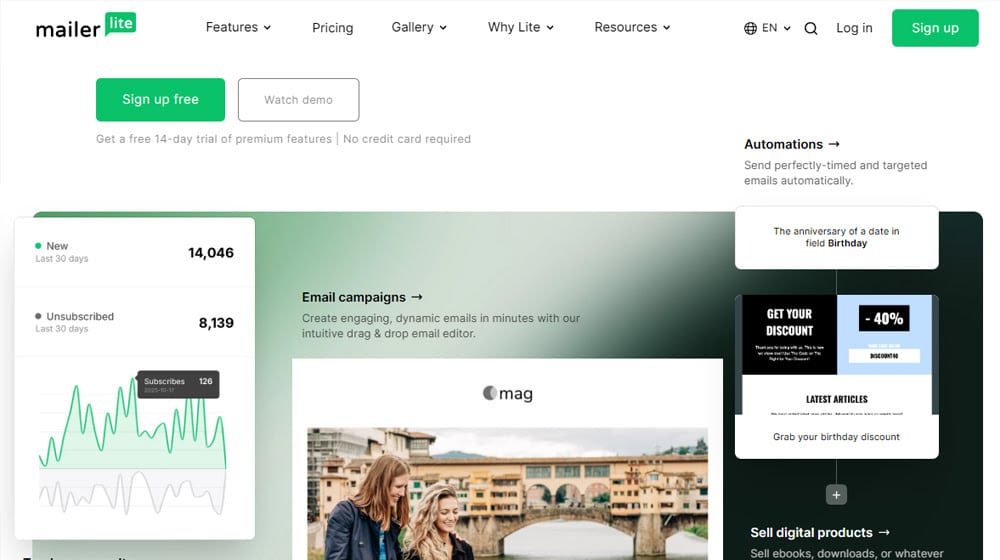
As for pricing, you have four plans.
Free. Capped at 500 subscribers (a lower number than most of the other platforms on this list), you are also limited to 12,000 emails monthly. You get core features like the drag-and-drop editor, email automations, websites, up to 10 landing pages, basic reporting, and opt-in forms, but that's it.
Growing Business. This is only $15 monthly for 1,000 subscribers, with unlimited monthly emails. You get everything in the free plan, plus the option to sell digital products, send dynamic emails, and auto-resend campaigns. You also get unlimited templates, websites, and landing pages, and can build a custom unsubscribe page. Testing is also expanded with multivariate testing options.
Advanced. $30 per month for 1,000 subscribers, this is the prior plan, but with more stuff, as always. You get smart sending, Facebook integration, custom HTML in your emails - try our HTML minifier tool to keep things lean - pop-ups for your website, and enhanced automations. They also have an AI writing assistant, but it's kind of just an afterthought, since AI isn't their focus here.
And, of course, there's a "contact us for details" enterprise plan.
Overall, if you want a cheap email platform that Just Works and doesn't get in the way of marketing you're doing through other channels, this is a great option.
5: Brevo
Brevo is another big name that has heavily integrated AI into its flow, though not to the same extent as ActiveCampaign. They have, over time, added more and more features and channels, so they do more than just emails as well. In particular, if you want SMS marketing, WhatsApp marketing, push notifications, loyalty plans, and support chat bots, Brevo can do all of it.
This expansion into other forms of communication allows Brevo to be a combination of email newsletter platform and customer service tool, alongside some aspects of sales. It's not quite as robust as a full sales platform, but it's getting there over time.
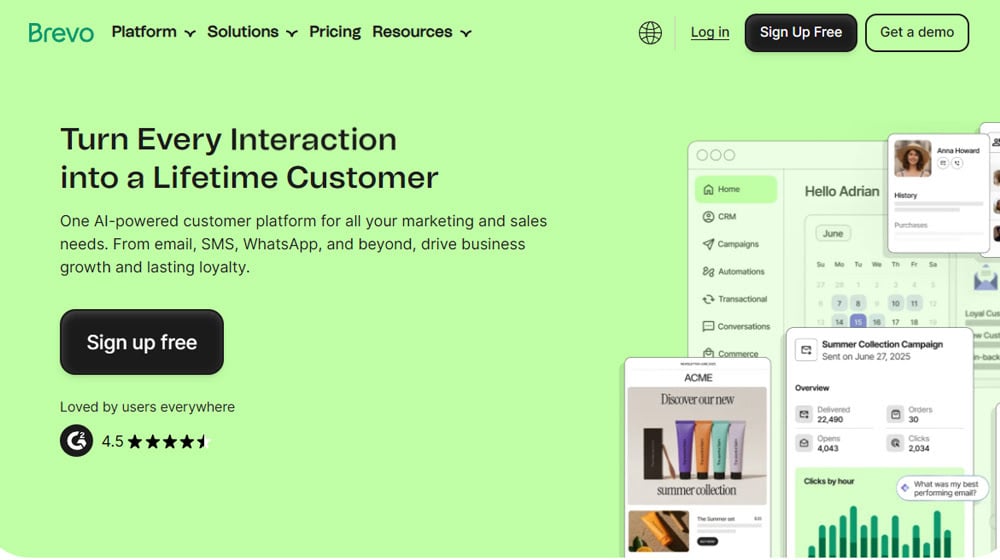
Brevo has five tiers, with free and enterprise taking up two of those slots.
- Free gives you 300 email sends per day to a cap of 2,000 contacts, gives you basic AI access and analytics, and not much more.
- Starter is $8/month for 2,000 contacts, but up to 100,000 email sends. You can also get the Sales Essentials package.
- Standard is $16/month for up to a million email sends to unlimited contacts, and bumps you to advanced analytics.
- Professional jumps to a whopping $550 per month for ten million email sends, but gives you advanced analytics, phone support, advanced sales tools for an added fee, and more.
- Enterprise, of course, gives you everything at a custom price based on your scale.
A few features are price-gated, as you would expect. Split testing is only available at Standard and above, white-label is an add-on for Starter but included at Standard and above, and various advanced tools like click heatmaps are Standard+. They list hundreds of individual features on their pricing page, so I'm not going to go through them all here.
The fact that they've segmented their sales features off to an added package can feel bad if you need it, but you're on a budget, but it's welcome if you don't need it; you don't feel like you're paying for features you won't use. If you're evaluating any platform's service terms, it's worth watching for red flags in service agreements before committing.
6: Klaviyo
Klaviyo is one of the platforms on the heavier end, with not just email and AI automation, but a whole data platform and a focus on omnichannel marketing. As such, it's difficult to condense their pricing down, because they have distinct pricing at different tiers for email and mobile messaging, analytics and data analysis, and AI-based customer service and helpdesk.
They do have a free plan with 500 email sends to up to 250 "active profiles", which is not quite contacts, but is how they measure your contacts list. SMS marketing costs credits. Higher-tier plans add in integrations and generative AI content, agents for marketing, and more.
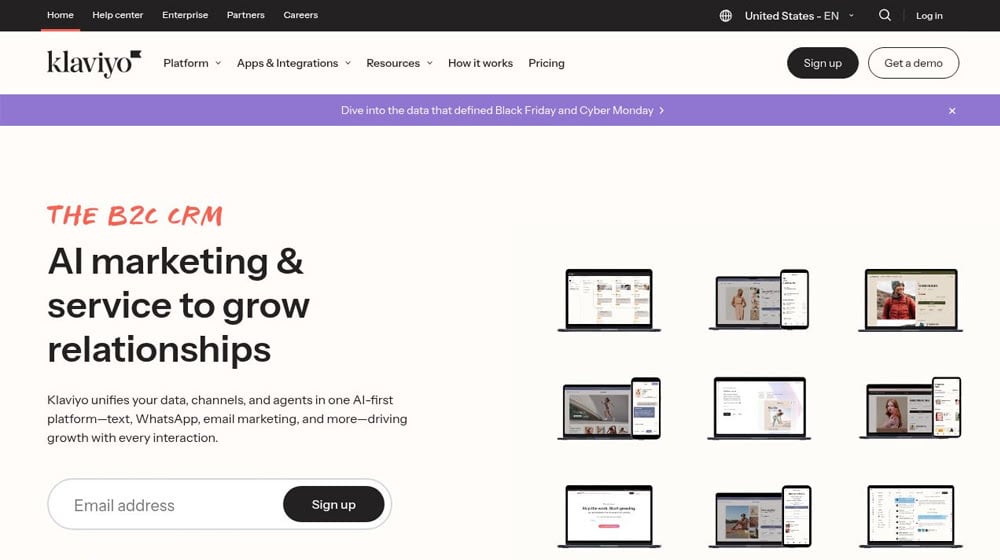
The trick is that added features add more. Adding product reviews is $25 per month for 250 orders. Adding marketing analytics for up to 1,500 active contacts is $100 per month. Full access to their data platform starts at $500 per month for 100k contacts.
If you're willing to invest in figuring it all out and setting it up, you can do a ton of very powerful things with Klaviyo. If you aren't, or you're just getting into email marketing, it's likely not the platform for you.
7: Omnisend
Omnisend is a slightly narrower email marketing platform than some of the others on this list because it's heavily focused on sales automation.
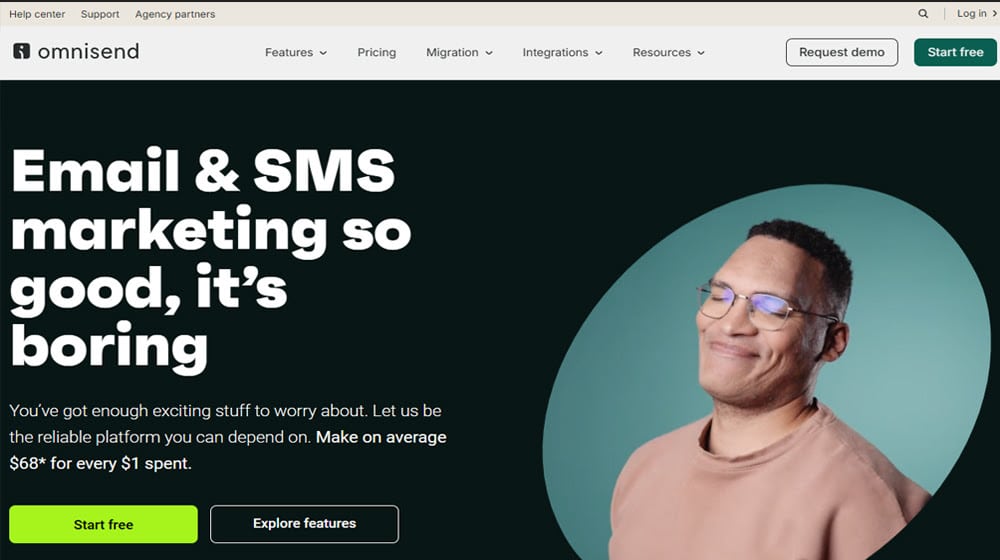
They do email, SMS, and push notifications, with automation and segmentation, good audience reporting and analysis, and all sorts of sales-focused features.
- Free limits you to 250 contacts and 500 monthly emails, as well as 500 push notifications, and $1 worth of SMS.
- Standard is $14/month for 1,000 contacts, 12k emails, unlimited notifications, and all the core features, including email templates, prebuilt workflows, integrations, split testing, forms, and landing pages.
- Pro is $42/month for 2,500 contacts, but bumps you to unlimited emails. You get advanced reporting and the option to buy a personalized content add-on. You also get the same $43 worth of SMS credits to play with.
- Enterprise, of course, is customized to your needs.
The nice thing about Omnisend is that most features aren't really gated by the tier of plan you're on. Some are, like advanced reporting, product personalization, and a few other small modules, but for the most part, all the paid plans have all the same features.
8: Ghost
Ghost is a relative newcomer to the email space and aims to be similar to Beehiiv in terms of additional features. They focus not just on email management, but on giving you a custom website with a custom domain as well.
The downside is that this adds some additional limits, like the size of files you can upload. Starter you can only upload files up to 5 MB, while Publisher lets you upload 100 MB files, and so on.
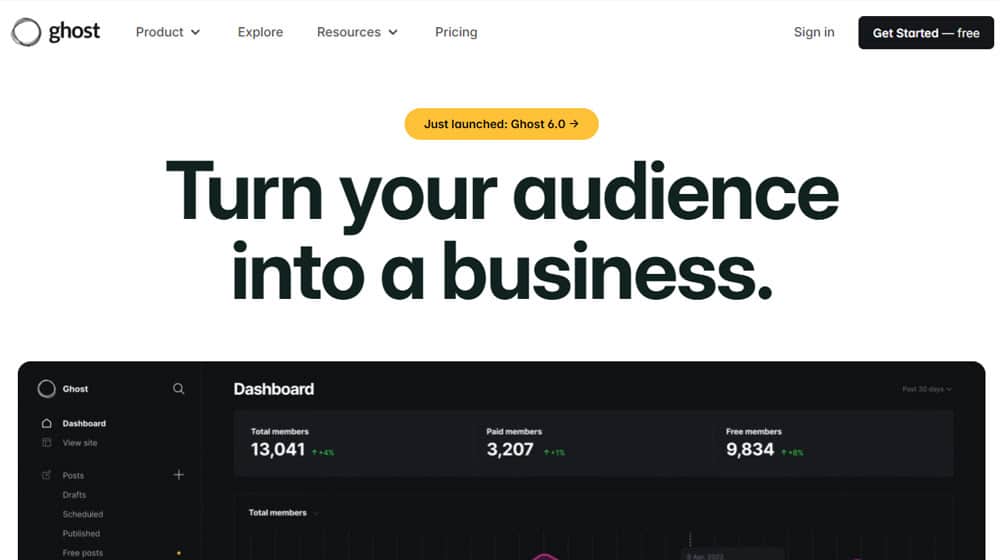
Their Starter plan is $15/month for 1,000 members and gives you basic email, website, and management features. You also get exposure in their Explore network and social distribution, some SEO tools, and other basic features.
Publisher is $30 per month for the same audience size, but gives you paid subscriptions, over 8,000 integrations (basically a copy of the Zapier library), advanced analytics, and more customization, among other things.
Business jumps up to $200 per month but 10,000 members, with higher usage limits. They also give you early access to new features as they develop them.
Finally, the custom plan gives you some unique features like a dedicated IP address for email sending and a 99.9% uptime SLA, with custom pricing.
Overall, if you put Ghost and Beehiiv head-to-head, I'd prefer Beehiiv, but Ghost isn't a bad option all around.
9: HubSpot
Who doesn't know HubSpot by now?
Overall, HubSpot's email newsletter management hub is fairly light on features, though what it does, it does well. They've also leaned into more AI automation in the last few years. The biggest benefit to using HubSpot is being part of the overall HubSpot ecosystem, which includes all of its site ownership, sales, marketing, and other hubs.
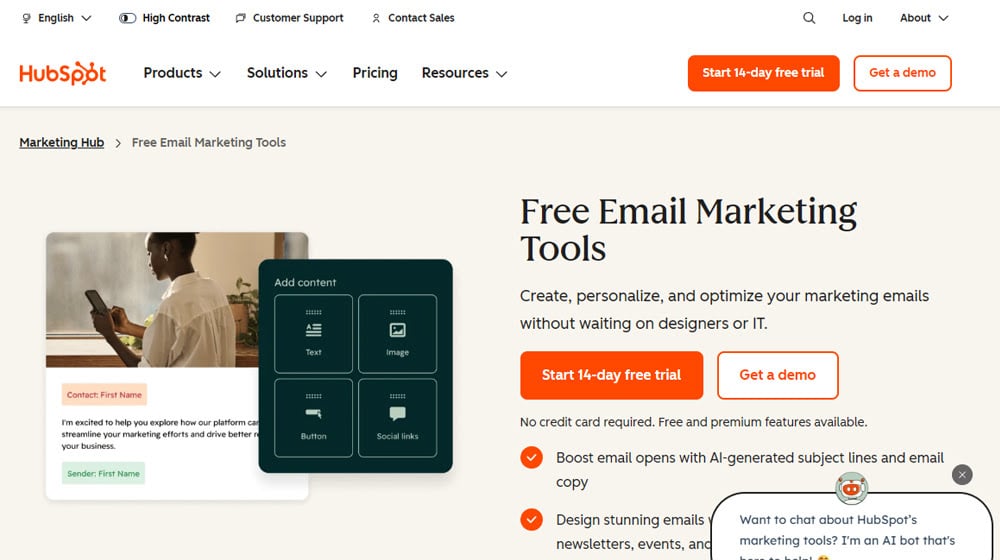
Email, specifically, is part of the overall Marketing Hub, which has a limited free version, a $9/month version with 1,000 contacts, and a jump up to a Professional version for $800/month.
Honestly, I think HubSpot is a very powerful tool if you're able to use most of its features at a large business level. Enterprises can make great use of it. Small businesses and individual marketers are just going to be swamped in upsells and cross-sells, and get frustrated at the limitations on what is clearly a cheap plan meant as a trial.
10: Mailchimp
Mailchimp is probably one of the oldest and most widely-recommended email management platforms out there. I know I've mentioned them frequently enough over the years. I think they've changed in ways that aren't necessarily all good since Intuit bought them, but they still do the job.
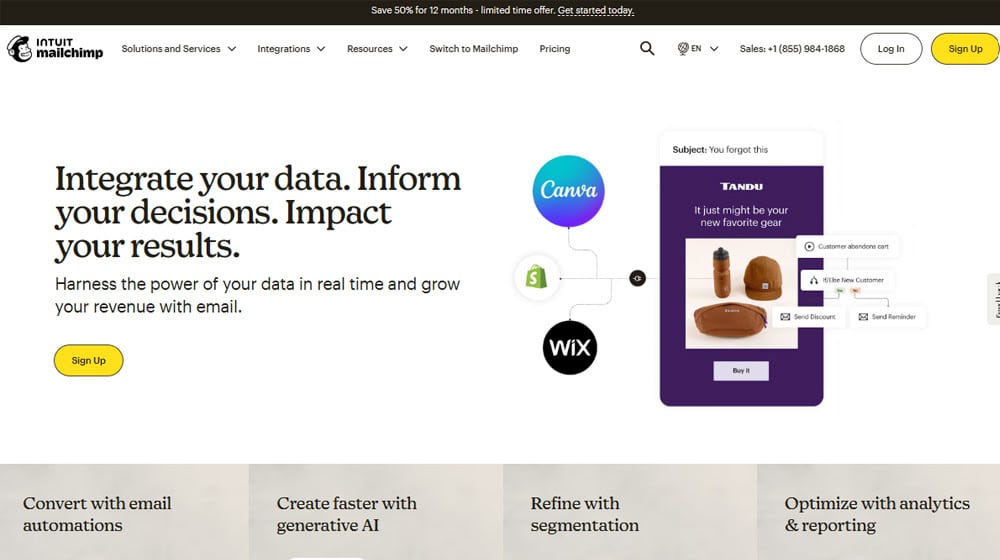
Mailchimp's free plan is a two-week trial, and then it jumps you into their Standard plan, so be aware of that. It's also capped at under 500 contacts and gives you very few features.
Essentials is $26.50 for 500-1,500 contacts. They give you basic audience segmentation, basic landing pages and opt-in forms, and basic analytics, with an SMS add-on if you want it. You're capped at 15,000 email sends per month.
Standard is $45/month for that same contact range and adds on generative AI, more automation, and custom reports, but not much else. The email send cap barely increases, up to 18,000.
Premium is $300/month and gives you all of their assorted features, including a dedicated onboarding specialist, up to 150,000 email sends and unlimited team members, at least.
Overall, I think Mailchimp is a solid option if you've been in the game long enough that you're already using them, but if you're looking for a new newsletter platform, I'd probably pick one of the other nine first. If you use WordPress, you can also check out how to add Mailchimp to your WordPress blog posts. But they aren't bad; they just haven't quite kept up with the value for the price.
That's my list! One of these ten is sure to do everything you need it to, so pick the right one and get started.

Written by James Parsons
Hi, I'm James Parsons! I founded Content Powered, a content marketing agency where I partner with businesses to help them grow through strategic content. With nearly twenty years of SEO and content marketing experience, I've had the joy of helping companies connect with their audiences in meaningful ways. I started my journey by building and growing several successful eCommerce companies solely through content marketing, and I love to share what I've learned along the way. You'll find my thoughts and insights in publications like Search Engine Watch, Search Engine Journal, Forbes, Entrepreneur, and Inc, among others. I've been fortunate to work with wonderful clients ranging from growing businesses to Fortune 500 companies like eBay and Expedia, and helping them shape their content strategies. My focus is on creating optimized content that resonates and converts. I'd love to connect – the best way to contact me is by scheduling a call or by email.





Comments