

Is It Safe to Copy and Repost a Blog Article to My Website?
Written by 
One of the most common questions I get from people, including clients and prospective clients, is whether or not it's okay to copy content from elsewhere and post it as a blog article on their site.
The short answer to this is "no," but there's some nuance to it that I want to explain in greater detail. So, I'm writing a post about it that I can point to as a resource later.
Let's dig in!
Key Takeaways
- Copying content from other sites without a syndication agreement or Creative Commons license is copyright infringement with serious legal penalties.
- Duplicate content across two sites you own doesn't double your SEO value; Google credits only the original source.
- Legitimate content syndication requires a formal agreement with the original publisher; attribution alone doesn't make copying acceptable.
- Copied content rarely builds brand authority, since it reflects someone else's expertise rather than your own.
- Tools like Copyscape can help detect duplicate content, while disabling RSS feeds can help prevent content theft.
Why You Might Want to Copy Content
I've seen many bloggers ask about copying content to their site, and there are many different reasons they give to do it.
The biggest one is usually time and effort investment. If you spent time creating a piece of content, why not use it anywhere you can? Alternatively, you're making a microsite and want to load it up with blog content but don't want to take the time to make all of that content.
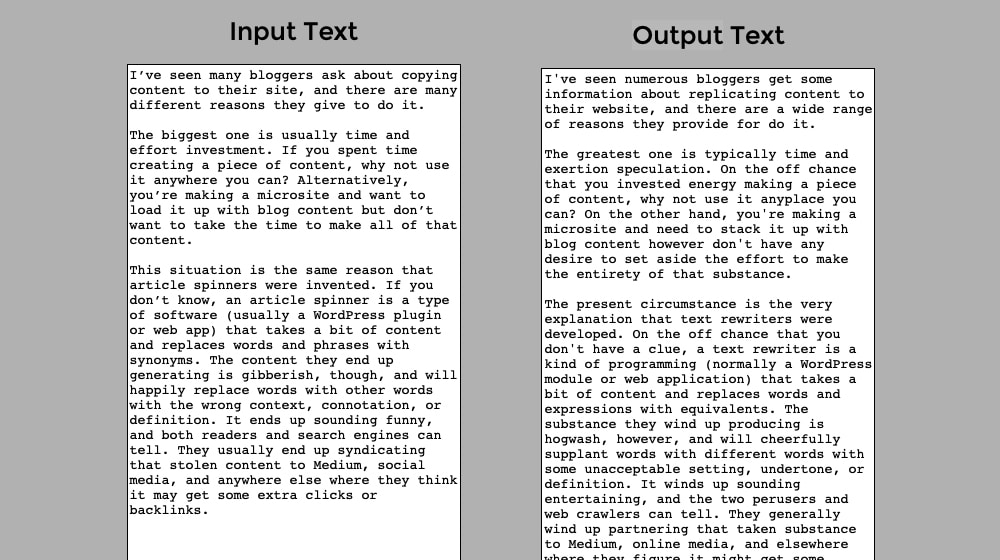
This situation is the same reason that article spinners were invented. If you don't know, an article spinner is a type of software (usually a WordPress plugin or web app) that takes a bit of content and replaces words and phrases with synonyms. The content they end up generating is gibberish, though, and will happily replace words with other words with the wrong context, connotation, or definition.
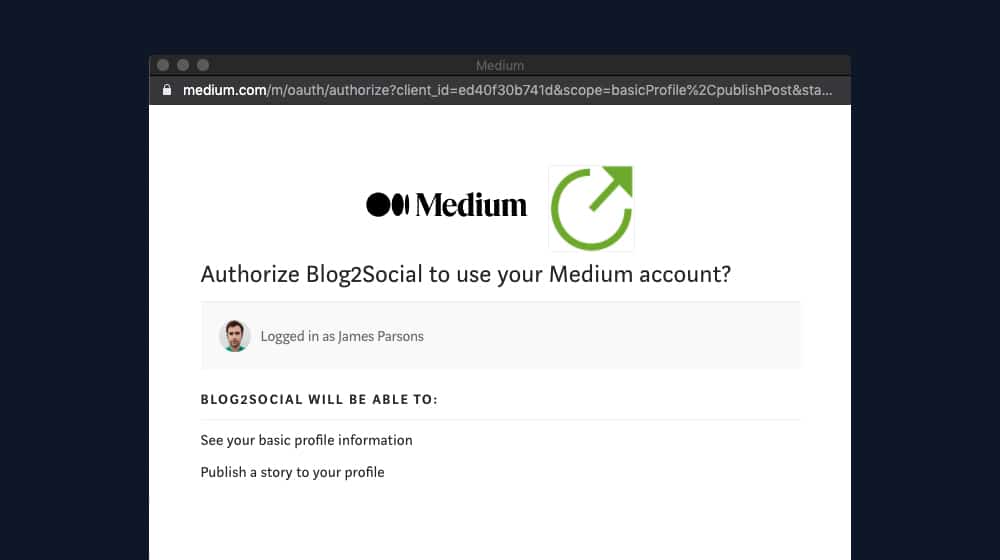
It ends up sounding funny, and both readers and search engines can tell. They usually end up syndicating that stolen content to Medium, social media, and anywhere else where they think it may get some extra clicks or backlinks.
Another reason is the desire to showcase the work of others while giving them attribution. This can fill gaps in your editorial calendar quickly and easily. There's a specific word for this, and I'll get to it later.
Regardless of why a blogger would want to copy content from another source onto your blog, it's not a great idea, and it's one of the traps people who are unfamiliar with SEO fall into. It seems like a good plan if you don't know any better, especially for those wondering whether they should delete blog posts that have zero visitors rather than repurpose them. You can also use our Content Similarity/Plagiarism Checker to see how much overlap exists between two pieces of content.
Three Methods of Copying Content
Now let's look at the three scenarios I see most often for copying content.
1. You have content on one site you own and want to copy it to another site you own.
This concept is a fairly reasonable one at first. After all, you created a piece of content; why shouldn't you use it as you please? You're the owner of the content, and you made it, so you have the rights to it, and you can post it anywhere you want.
The trouble here is not legal; it's SEO. When the same article appears on two different domains, it can only give value to one of them, and the other is either stealing the content or syndicating it.
Google wants to give credit to the source of the article. Otherwise, what would stop a large site from simply copying the content from any small site they come across? The small site wouldn't have the power to fight back.
Generally, the webpage published first (and subsequently had Google index that article) is the original source. However, there are many different factors at play here. If somebody steals your content and backdates it to an earlier date in an attempt to fool Google, it may not work if that website has a history of stealing content. Website reputation also matters, and websites that steal content tend to have a pretty bad reputation.
So, this means that even though you own the content and have the right to do with it what you will, you can't get duplicate value out of it. I'll dig more into the problems with duplicate content later, though.
For now, suffice it to say that there's no real shortcut to growing two sites. You can't simply copy a site and expect the copy to work just as well. At best, they might divide the original value, but more often, the duplicated blog post never gains traction.
2. You want to copy content from a site you don't own, with attribution for the original creator.
When you don't own a piece of content but you want to use it on your site, in some cases, you can do so with attribution. There are two instances where this is allowable.
The first is content syndication (not to be confused with content curation). From HubSpot:
"Content Syndication means republishing the same piece of content -- an article, a video, an infographic, etc. -- on one or more different websites. Publications, big and small, like to syndicate content because it helps them give fresh information to their readers. The original authors also benefit from this practice since it gets their brand in front of a new audience. It's a win-win."
You see this all the time with news websites. Every local NBC affiliated site will post the same story across them, with the same author, the exact copy, the same everything. You'll also see it on some news sites, like Yahoo News, which will post content from news affiliates. This post on Yahoo News has a line at the bottom that says "read the original article on Business Insider," along with a Business Insider flag at the top. Yahoo News didn't create that content; Business Insider did, allowing Yahoo to syndicate it.
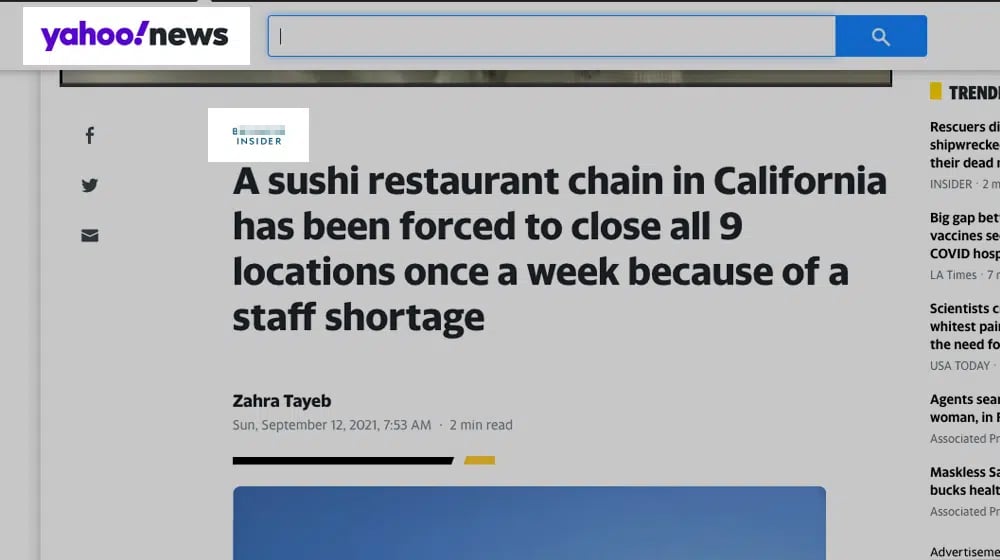
The key here is the word affiliated. To syndicate content, you need a syndication deal with the person initially publishing the content. Yahoo deals with other major news publications, such as Business Insider, Reuters, HuffPost, and hundreds of smaller news sites. Yahoo originally wrote very little of what was published on Yahoo.
You can't syndicate content without a syndication agreement. If you take content from a site you didn't produce and don't own, even if you link to the original post and attribute it to their website, it's still content theft.
You can use the second option when an article is licensed under a specific Creative Commons license. The Creative Commons license set is a group of licenses you can use to, essentially, waive your right to copyright on a piece of content. You can say, "you can use this so long as you credit me," or "you can use and make changes to this as long as it's non-commercial," and so on. There are a variety of Creative Commons licenses you can see at the link above.
Now, most content licensed under Creative Commons tends to be art, not writing. It's visual, graphical, or audio. These tend to be elements people can use in their productions, like a stock photo you use as a background to your header image or a stock song you use as background music in a YouTube video. If you're wondering whether using stock photos affects your SEO, it's worth understanding how Google evaluates image originality.
Sometimes, written works are licensed under a Creative Commons license, but that content is rarely worth copying wholesale. You can, but it won't do you a lot of good.
There's also simple copyright expiration. Once a piece of written content has been around long enough, it enters the public domain, where anyone can use it. A lot of old fairy tales and stories, as well as a ton of older literature, fall under this category. Disney has fought this for years, which is why the current duration of copyright is "the life of the author plus 70 years." So, if the author of the content you want to copy died 70 years ago, you can use it on your site. But, again, that's not likely to have any value to you as a modern-day business blog.
3. You want to copy content from a site you don't own, with no attribution.
Why not just take content? If someone posts it on the internet for anyone to see, that means it's free to use, right?
Unfortunately, this is a pervasive attitude, particularly amongst older people. It leads to a ton of content rights violations everywhere, from YouTube to blogs to graphic designs. Every time a business performs a Google image search for a picture and uses it in their branding, they're doing this.
Those of you in the know are already screaming about this, and with good reason. This isn't just content theft; it's a copyright law violation, and it has a lot of penalties attached to it.
- If Google discovers it - and they will - they can penalize or completely deindex your site.
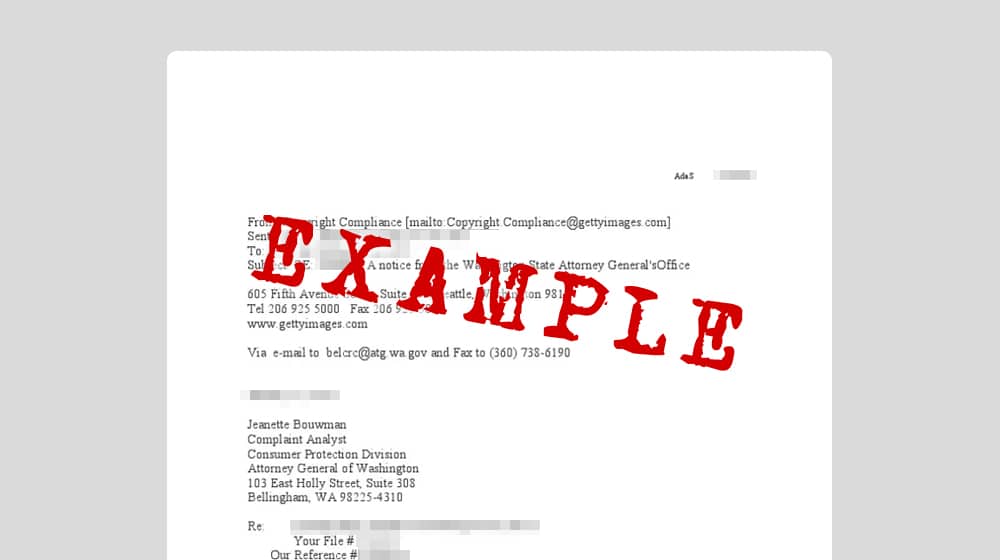
- If the original blogger discovers it, they can issue a DMCA takedown for the content and have it pulled by your web host.
- If you persist in using it, the copyright holder can sue you for a copyright infringement. Penalties for this can range from $200 to $150,000 per violation, plus legal fees, and in extreme cases can even include jail time.
Yes, that's right; in an extreme circumstance of content theft, you could be looking at harsh financial penalties and jail time - all because you wanted to fill out a content calendar the easy way!
Now, I'll give credit where it's due; most of my clients and prospective clients who have asked about copying content know better than committing copyright violations. They want to repurpose their own content or syndicated content but don't know the right way to go about it. I still have to include this because it comes up now and then, and I cannot stress this point enough: do not steal content.
The Problem with Duplicate Content
There are a few problems with duplicate content, even if you use it legitimately.
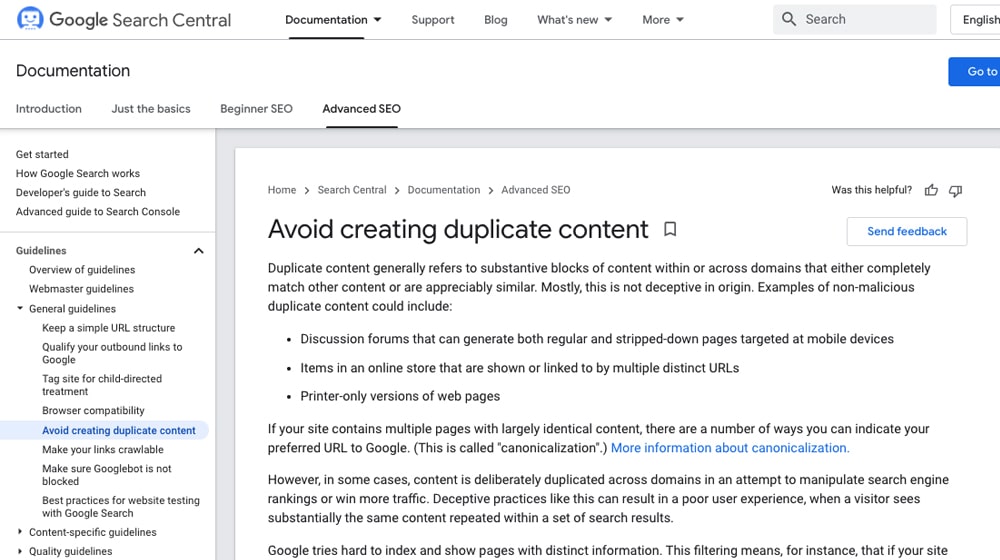
If you're duplicating content without the right attributes and credit, Google will consider it content theft. They now take duplicate content seriously since the bad old days of the internet where copied content was rampant, and there was no enforcement to be found. There was a time, years ago - and maybe some of you remember this - where the top 10, 20, or more Google search results were all identical articles published on different domains. This strategy doesn't work anymore, as it gives Google's users a poor experience. Part of what makes Google great is reading unique content, not reading dozens of the same articles.
Duplicate content isn't a good thing from a user perspective. If you want information about a subject and there are "ten" results, but all ten of them are identical, you're only getting one result. If you want something else, you either need to dig deep to find it, or you're out of luck.
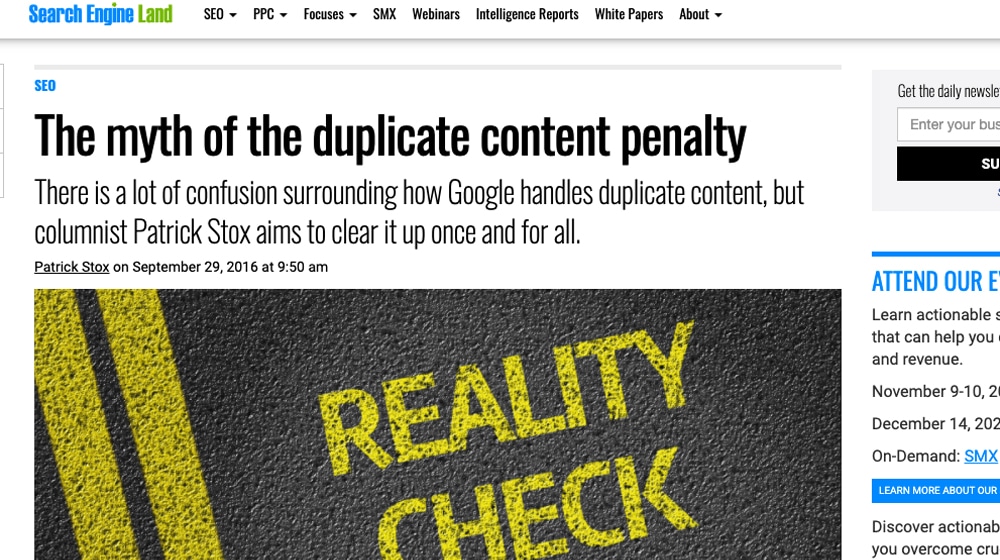
Many SEO experts call duplicate content a "myth," but the truth is, there are many different types of plagiarized content. If you re-publish a news article on your site relevant to your audience, it's not going to get your website delisted from Google. However, if you copy dozens of articles from one of your websites to a brand new website, you shouldn't expect that content to get visitors from search engines, even if it won't penalize your site. So, it might be a myth that you will get a manual action penalty, but that doesn't mean it's a good idea in the slightest. There are also other unconfirmed SEO ranking factors worth keeping in mind when evaluating your site's performance.
Google didn't like duplicate content because users didn't like it, so they started finding the source of content and promoting that one, while all the rest were either demoted or removed. They still allow for syndication and non-malicious duplication, using canonicalization, but there's a catch. A thin content detector can also help you identify pages that may be at risk.
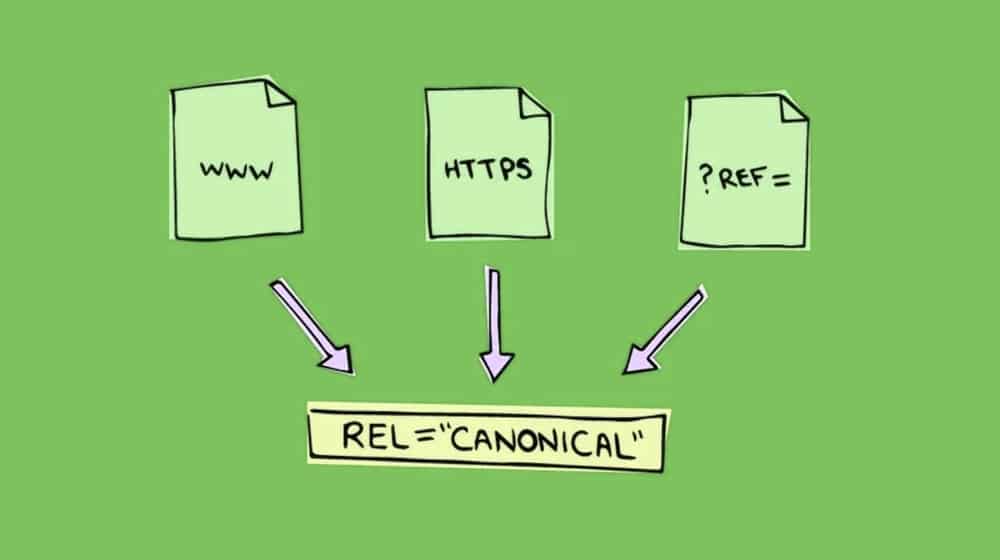
If you post content to your site that came from somewhere else and set your rel="canonical" tags to the source, that source gets the value from that content. You won't get organic traffic, but at least you won't be penalized for it, either. You can use our canonical URL checker to verify your tags are implemented correctly, and our meta tag extractor to audit other important on-page signals as well.
Check and Prevent Duplicate Content
The best way to check for duplicate content is with a plagiarism checker such as Copyscape. The "Free" version does a great job for content that is already published, and the "Premium" version can search snippets of text and perform batch searches. You can also use our content similarity checker to compare pages side by side.
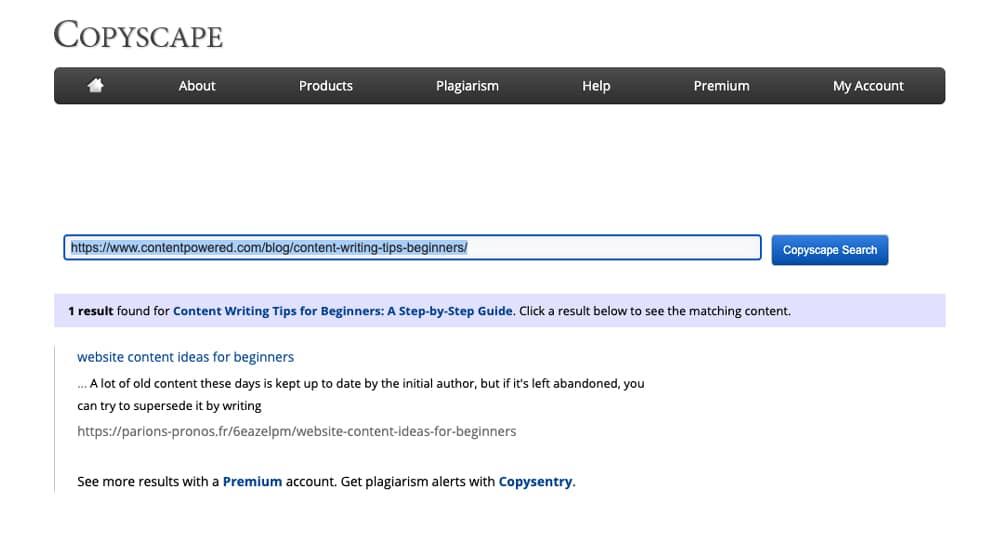
They also have a product called Copy Sentry, which can scan your blog posts for you on a schedule and let you know if any of them are stolen.
A hit on Copyscape doesn't necessarily mean that it's stolen; it's a very sensitive piece of software that can pick up a single copied sentence. Small amounts of text like this aren't something to worry about. If the entire article exists on another website, though, you may want to reconsider reusing it.
There are many ways to prevent and discourage content theft, such as disabling your RSS feed or showing summaries instead of entire blog posts. You can also use a keyword cannibalization checker to identify pages on your own site that may be competing with each other.
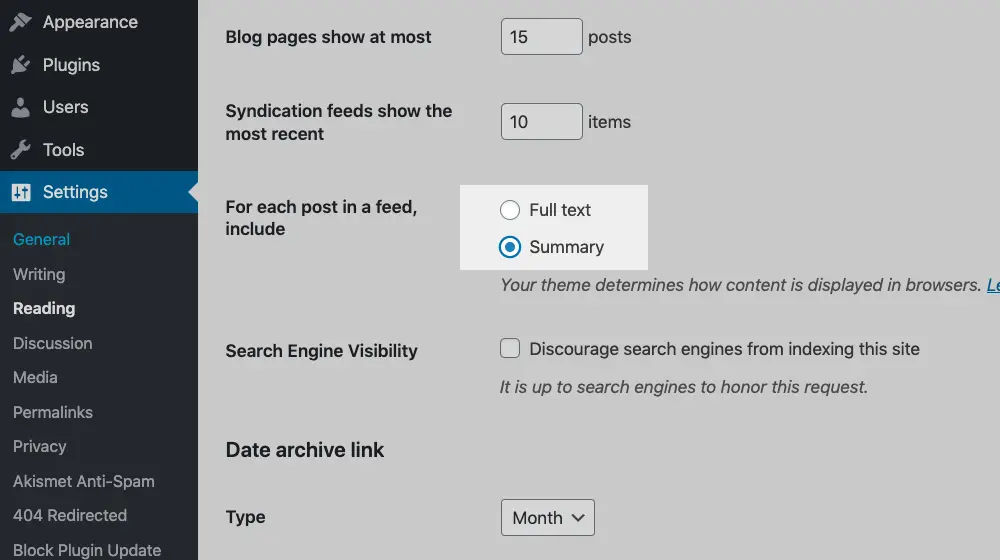
I wrote a separate post on that subject here:
The Quest for Unique Value
The key to getting a website to rank is developing a robust and unique content strategy. Content should showcase your brand authority, thought leadership, and knowledge of your subject. It's meant to convince readers that you know what you're talking about so that they trust you as a brand, so they will be more likely to convert into customers.
If the content you're posting comes from another content creator, is it doing that for you? Probably not.
- The content might be referential to areas of expertise you don't have.
- The content might be focused on an aspect of your industry you don't cover.
- The content comes from an authority that isn't you; why would you gain authority from knowing who else in the industry has authority?
You don't get much if any SEO value out of syndicating blog content. People who use syndication as an SEO technique do so to build links, unlinked mentions, and traffic. If you're the one publishing the syndicated content, you're not getting those; you're giving them.
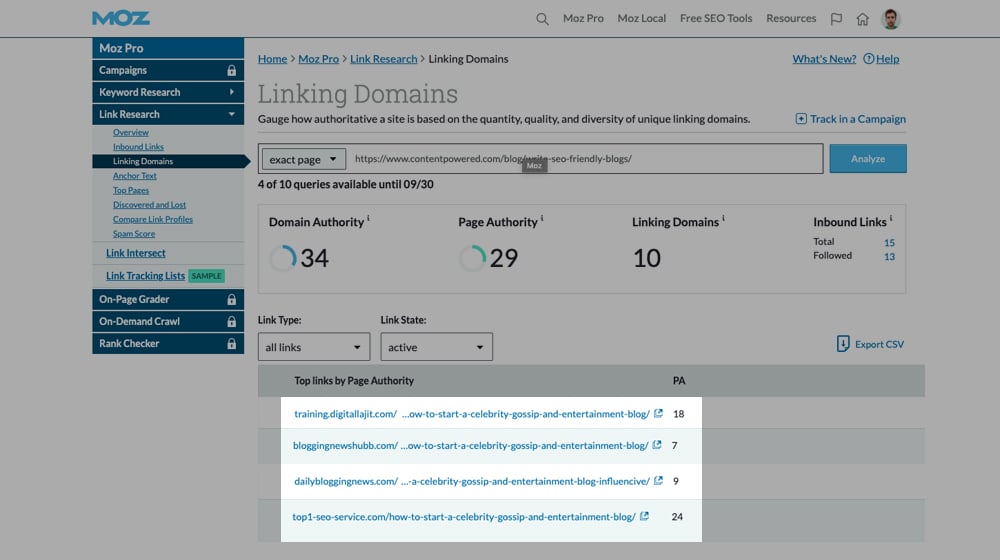
What about if you're the one that produced the content in the first place? Well, if you're copying it between two of your sites, Google will most likely credit the value to the original blogger, not the copy. The copy won't do much for the secondary site. Users also might not trust the second site if they recognize the content from the first website. Even if they're both written by the same person, they may wonder if it's plagiarism and if they can trust the second site.
In extreme cases, the two sites might even be considered part of a private blog network or another form of link scam. These are meant to promote one website using a network of other sites that exist solely to give it a small amount of SEO value. At the same time, none of it is genuinely organic. These can often be deindexed, and recovery from this penalty can be difficult or impossible.
The Moral of the Story
The full breakdown is simple. For your website to succeed, you need as much unique and high-quality content as possible. There are no shortcuts to this. Someone, somewhere, needs to put the time, money, or hard work into creating original content if you want your site to succeed. You can do that yourself, or you can pay a content marketing company like mine to do it for you.
As long as the content on your site is original, you'll be off to a good start.

Written by James Parsons
Hi, I'm James Parsons! I founded Content Powered, a content marketing agency where I partner with businesses to help them grow through strategic content. With nearly twenty years of SEO and content marketing experience, I've had the joy of helping companies connect with their audiences in meaningful ways. I started my journey by building and growing several successful eCommerce companies solely through content marketing, and I love to share what I've learned along the way. You'll find my thoughts and insights in publications like Search Engine Watch, Search Engine Journal, Forbes, Entrepreneur, and Inc, among others. I've been fortunate to work with wonderful clients ranging from growing businesses to Fortune 500 companies like eBay and Expedia, and helping them shape their content strategies. My focus is on creating optimized content that resonates and converts. I'd love to connect – the best way to contact me is by scheduling a call or by email.






June 09, 2022
Hi, what about a post that asks to be reposted? e.g. "I encourage sharing of this information--so if you'd like to repost or distribute this article, include credit and link back"
June 09, 2022
Hi Jen!
You have a few options:
Option 1: I think sharing an article like this is better suited for social media where this isn't being published on your site. Your content and SEO are sensitive, and duplicate content is a potential issue you must be careful of.
Option 2: An alternative might be to write an entirely new article on the same subject in your own words and give a fresh new perspective. You can link to the original that inspired you and add some valuable information. That would have the chance to rank and improve your site overall.
Option 3: If you still want to publish somebody else's content on your blog, you might want to noindex that post and nofollow the links so that it isn't considered for indexation on search engines. You'll also want to remove it from your sitemap so you're not sending search engines mixed signals. Also, it would help to include the link to the original post. This way, it will still exist on your site for your readers, and it will send a clear message that you're not stealing the article or trying to outrank them, and you're linking to the original author.
I much prefer Options #1 and #2 regarding SEO.
January 09, 2024
I will love to copy some educative news from google to post on other platforms.
January 09, 2024
Hey Marion,
Look into RSS platforms! This will save you a lot of time and help you find content to syndicate much more quickly.